
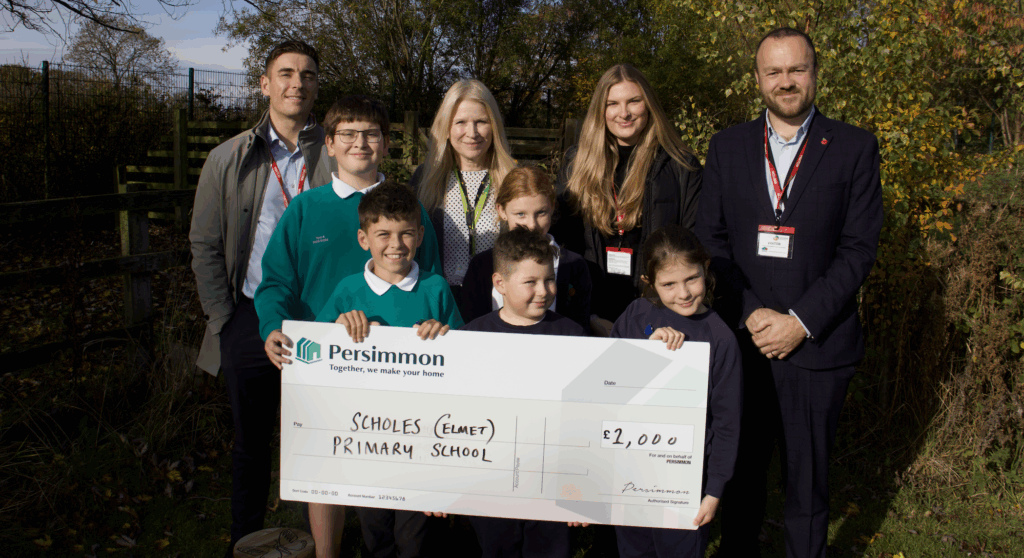
Last week, our Junior Leadership Team took receipt of a huge (literally) cheque from Persimmon Homes. They’ve helped us clear the space ready for the development of our Forest School. Their generous donation has helped to pay for all the equipment needed so that in January we can enjoy learning in our outside space. Thank you.
The rest of this week’s message is about the Autumn 2 topic in Key Stages 1 and 2. Last half-term, it was a Geography topic; this half-term, it’s Art…
This half-term, we’re artists. We’ll be developing our art knowledge and skills. The learning has two aspects to it. In art history and appreciation lessons, children will be learning about some specific artists and their work. In art process lessons, children will practise and develop skills by creating art.
Each phase has age-related specific knowledge, skills and vocabulary that they’ll learn, use and apply across the topic. Follow this link to the Curriculum Guide to find out more.
Years 1 and 2
Children have two featured artists who they’ll be studying across the half-term: Leonardo Da Vinci and Paul Klee. They’ll compare their art, talking about similarities and differences. They’ll discuss what they like and dislike about the art and how it makes them feel. They’ll also learn about the artists’ lives and where in the world they lived.
In practical art lessons, children will be honing their artistic skills and knowledge by sketching objects using pencil, learning about and mixing colour and then they’ll be learning how to print by creating relief prints inspired by the artwork they’ve studied.
Part way through the half-term, they’ll visit the Hepworth Gallery for a printmaking workshop to complement the learning in school.
Years 3 and 4
Children will be learning about the work of Wassily Kandinsky and Martha McDonald Napaltjarri. They’ll compare and contrast the artworks by these artists and also learn about their lives and the places they lived. In particular, children will learn about abstract and figurative art (see the vocabulary for definitions of these words).
In practical art sessions, children will develop observational drawing skills and their understanding of colour by learning about warm, cold and complementary colours. They’ll then apply what they’ve learnt by creating sculptures inspired by the artists they’ve studied.
Years 5 and 6
Children are learning about sculpture in their art lessons and will be focussing on three artists: Thomas J Price, Henry Moore and Barbara Hepworth. The children have already been on their school trip to the Yorkshire Sculpture Park where they’ve seen and learned about sculptures by these artists. In Art history and appreciation lessons, they’ll learn about the lives of these artists and how their localities have influenced their art. They’ll learn about classical and modern art in relation to their featured artists and in art movements more generally. They’ll also learn when and why the modern art movement happened.
In practical Art lessons, children will develop their observational skills and will create ‘soap sculptures’ inspired by the work of Henry Moore and Barbara Hepworth.
How can you help?
Talk to your child about what they’ve been learning in class. The Class News page of the school website is a good place to find out more about what the children are doing.
Familiarise yourself with the artists and the artwork that your child will be learning about in class. Look in books or on the internet for pieces by the artists and talk about them. Find art by other artists that you like and compare it to the featured artists. If you feel confident, you can go into more depth using the vocabulary. However, if not, leave that to the teachers and just enjoy looking at the pieces and asking general questions:
- What do you like or dislike about the art?
- How does the art make you feel?
- Is it life-like or not?
- What colours can you see?
The Tate Gallery has a good children’s website with games and activities which children can explore.
If you’re in Leeds, the Leeds Art Gallery and Henry Moore Institute are both free to enter.