
Science – planting seeds and watching them grow
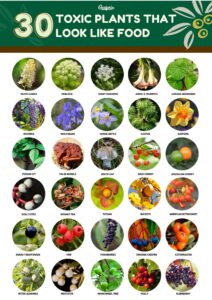
We have been busy planting on our science topic. We have bulbs that we are observing in different conditions and this week, we planted some seeds. We looked carefully at the packet to interpret when to plant and when to expect flowers. We also talked about how to be safe around plants, seeds and berries. We must never eat any without checking with a grown up as some can be toxic.
Help at home by planting some seeds or bulbs and watching how they grow. Talk about how some plants are food, measure their growth or try growing in different conditions.


Living and learning
Our living and learning statement this week has been about recognising the importance of sleep. The children talked about what sleep does for our bodies and emotions and how it impacts on our lives. They were able to recognise that sleep helps our memory, helps us to concentrate, keeps our immune systems healthy, it repairs our bodies and it keeps our mental health positive. They could identify how a lack of sleep could impact them at school and how it would make them feel. They generated lots of ideas of how to get a good nights sleep: having a bath, listening to some music, reading and even a bit of drawing.
Help at home: Is your child getting enough sleep? The recommended amount of sleep for primary school children is between 9 and 12 hours. How could you improve your child’s sleep? Encourage your child to read before bed rather than depending on screen time.
Living and Learning – Health and Prevention
This fortnight across Years 3 and 4 we have been learning about ways we look after our physical health including personal hygiene and hand-washing, protecting ourselves from the sun and getting good sleep.
This week in particular, we are thinking about why good sleep is important and what healthy habits we can develop to set us up well for resting such as having a tidy space, having some calm time before bed without devices and avoiding too much sugar.
Please help at home by asking us about our learning.
Living and Learning
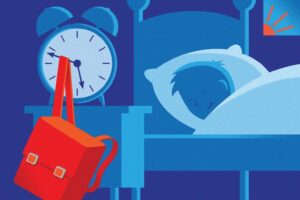
This week’s Living and Learning statement is ‘I recognise the importance of sleep’.
In our session, we talked about what sorts of things we can do in order to help us get to sleep on an evening. We also talked about how we might be able to get back to sleep, if we wake up in the night.
The children listened to a story of a girl who found it difficult to sleep on a night. They identified several reasons the girl was not able to sleep and linked this to their own lives. Many of the children said that they had realised some of the reasons they might wake up or have bad dreams are caused by the things they do before going to bed. We came up with a few ideas of how we could relax before bedtime and adjust our routines to get the perfect night’s sleep.
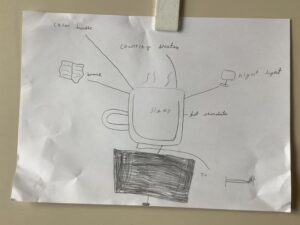
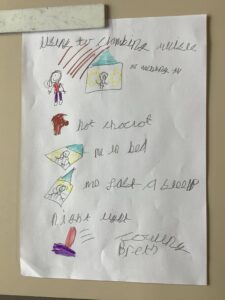
We made some posters to remind us of what to avoid before bedtime and what we can do to help us fall asleep. Here are some of the posters the children came up with.

The Very Hungry Caterpillar
Children returned to Nursery brilliantly this week and settled in happily. We heard all about your Easter holiday trips and visits from the Easter Bunny.
This week, we read the very popular story by Eric Carle, called ‘The Very Hungry Caterpillar’ and started to learn about the life cycle of a butterfly. We’re hoping to have some tiny, wriggling guests in Nursery very soon. Watch this space!


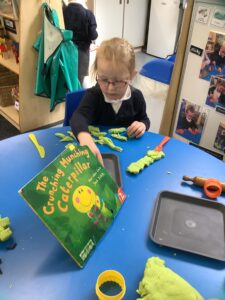
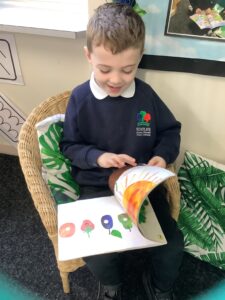

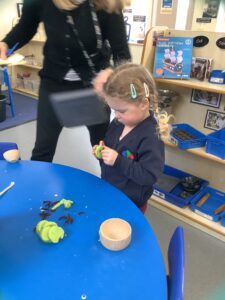

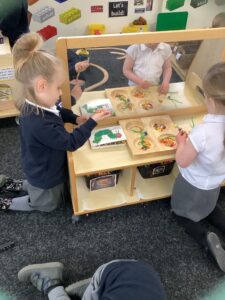
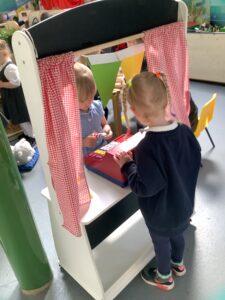
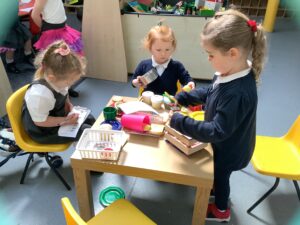
In the Sunshine room, you may have noticed that we have a new cafe role play area. It was a hive of activity last week, with children busy taking orders and serving food to the hungry customers.

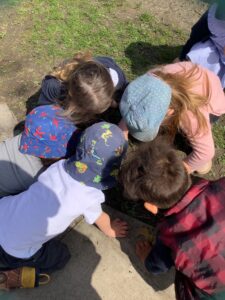
Children showed an interest in looking for creepy crawlies outside. We found lots of creatures hiding under logs including wood lice, slugs and some very long worms. We’ll continue this interest in worms next week and learn all about wriggly worms!
Summer 1- The fun has begun!
The sun is shining and so are we! We’re excited to be back together for a happy and healthy Summer term.
This half term is called Life on Earth. We’ll be exploring minibeasts, wild animals, farm animals and the human body.
The Bad-Tempered Ladybird
This week, we’ve been reading The Bad-Tempered Ladybird by Eric Carle.
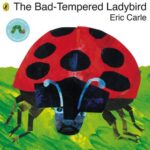
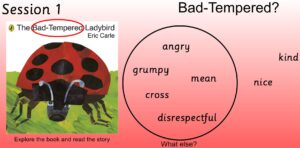
There was lots to explore in this story; feelings and appropriate behaviours, clocks/time and the comparative sizes of animals.
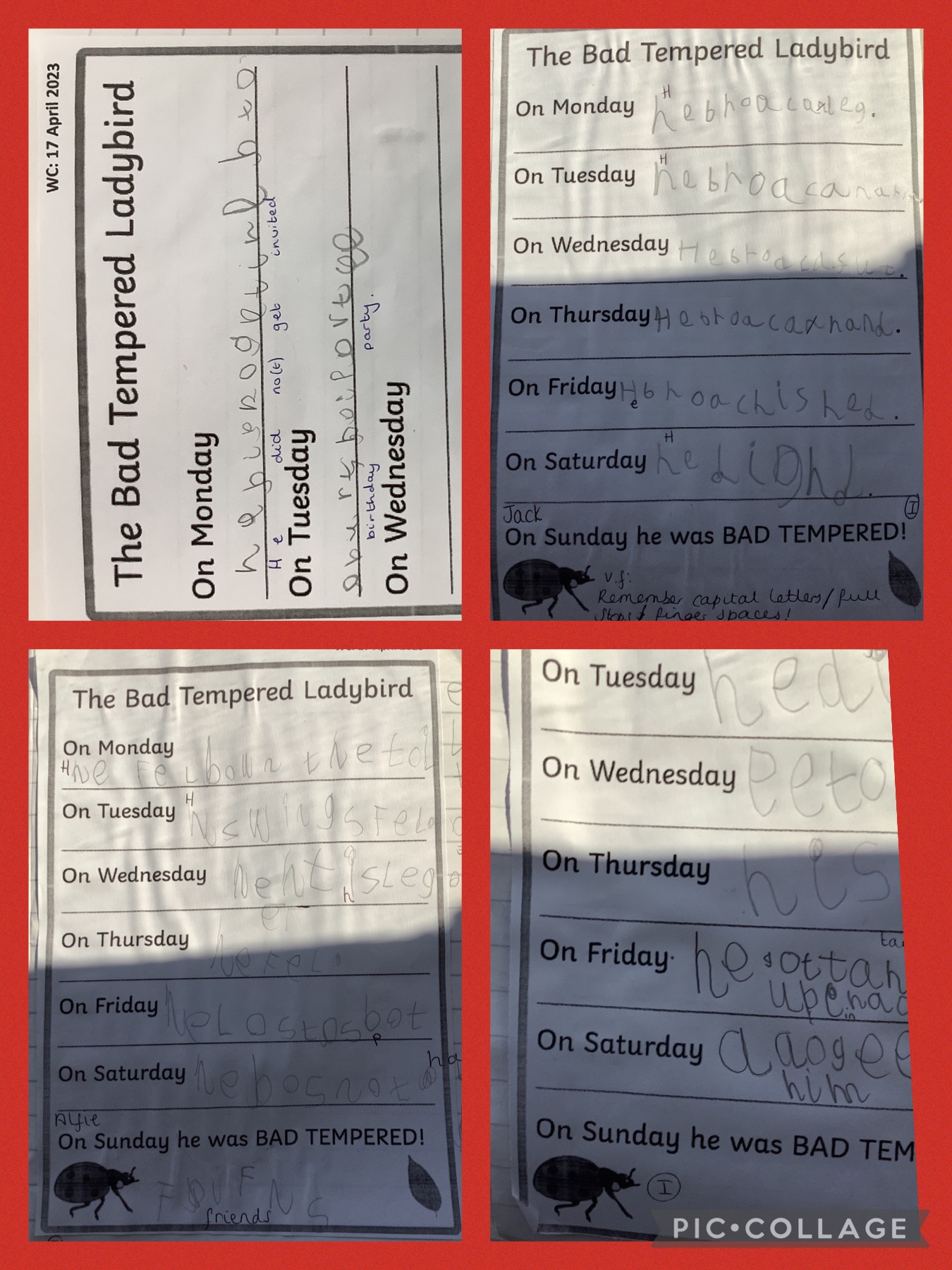
Frustrated is our ‘word of the week’. In our writing, we’ve been wondering what went wrong in the ladybird’s week, to make it behave so badly!
Art; clay modelling
We’ve been using clay to make minibeasts. We looked at pictures and photos of minibeasts, before making our models. We had spiky caterpillars, wiggly worms and crawly spiders to name just a few. Clay is great for our fine motor skills. We have to work hard to mold, pull, press and shape. We’ve also been making ladybirds out of dough.

Maths
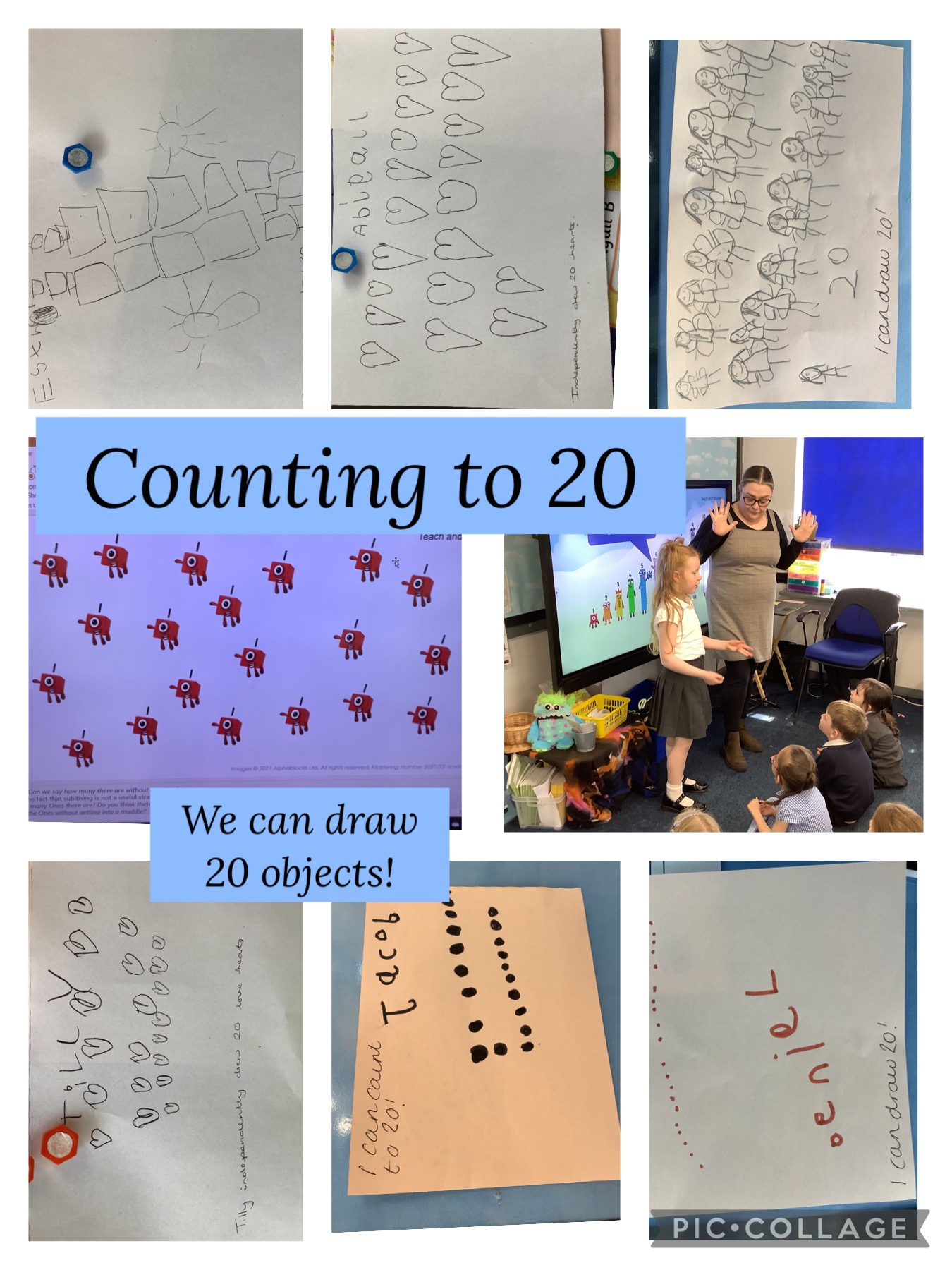
In Maths, we’ve been counting beyond ten, to twenty. We’ve been suggesting ways to make counting easier, when we are faced with a lot of objects to count.
You can put them in another pile after you’ve counted them- Grace
You can line them up so it’s easier to count- Alfie
We’ve also been counting things that cannot be moved, or things that cannot be seen (such as sounds/actions)
In provision, we re-visited the doubling ladybirds and recorded our doubles.
Help at home- Challenge your child to count more than ten objects. Can they count the pegs on the washing line? Can they count toys in their toy box? Can they count books on a book shelf? Don’t forget to send in photos of counting at home!
Phonics
Summer 1 week 1 has been an introduction to reading phase 4 words. We’ve also learnt our first phase 4 tricky words; said, so, have, like
Help at home- Please continue to work through the weekly learn at home phonics sheets, throughout the Summer term. We’ll continue to send these home each Friday.

Poetry Picnic
Each week we will be learning a new poem. We will recite this poem each day. By saying the poem out loud, we can focus on the sounds and rhythm of each word or line. We talk to the children about how this can help us become better readers. This week’s poem is called Pitter Patter
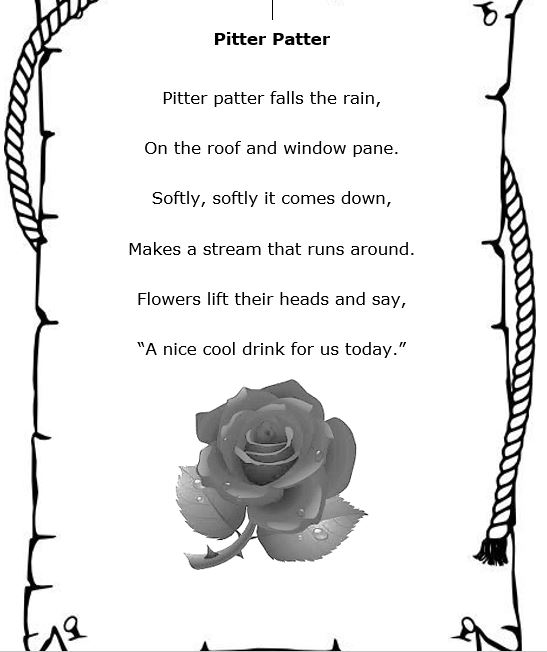
We talk about how a poem sometimes has rhyming words and sometimes doesn’t. Can your child tell you the rhyming words in this week’s poem? We also talk about how a poem can have a fast rhythm or a slow rhythm.
click below to watch us recite this week’s poem!
More pictures of our learning this week…

Reminders and Dates
SWIMMING DATES- Summer 1
Rainbow Class- 19 Apr, 3 May, 17 May
Sunshine Class- 26 Apr, 10 May, 24 May
We know that Rainbow class missed a swimming session in Spring 2 due to the pool closure. This should be made up in Summer 2, which is a 7 week term.
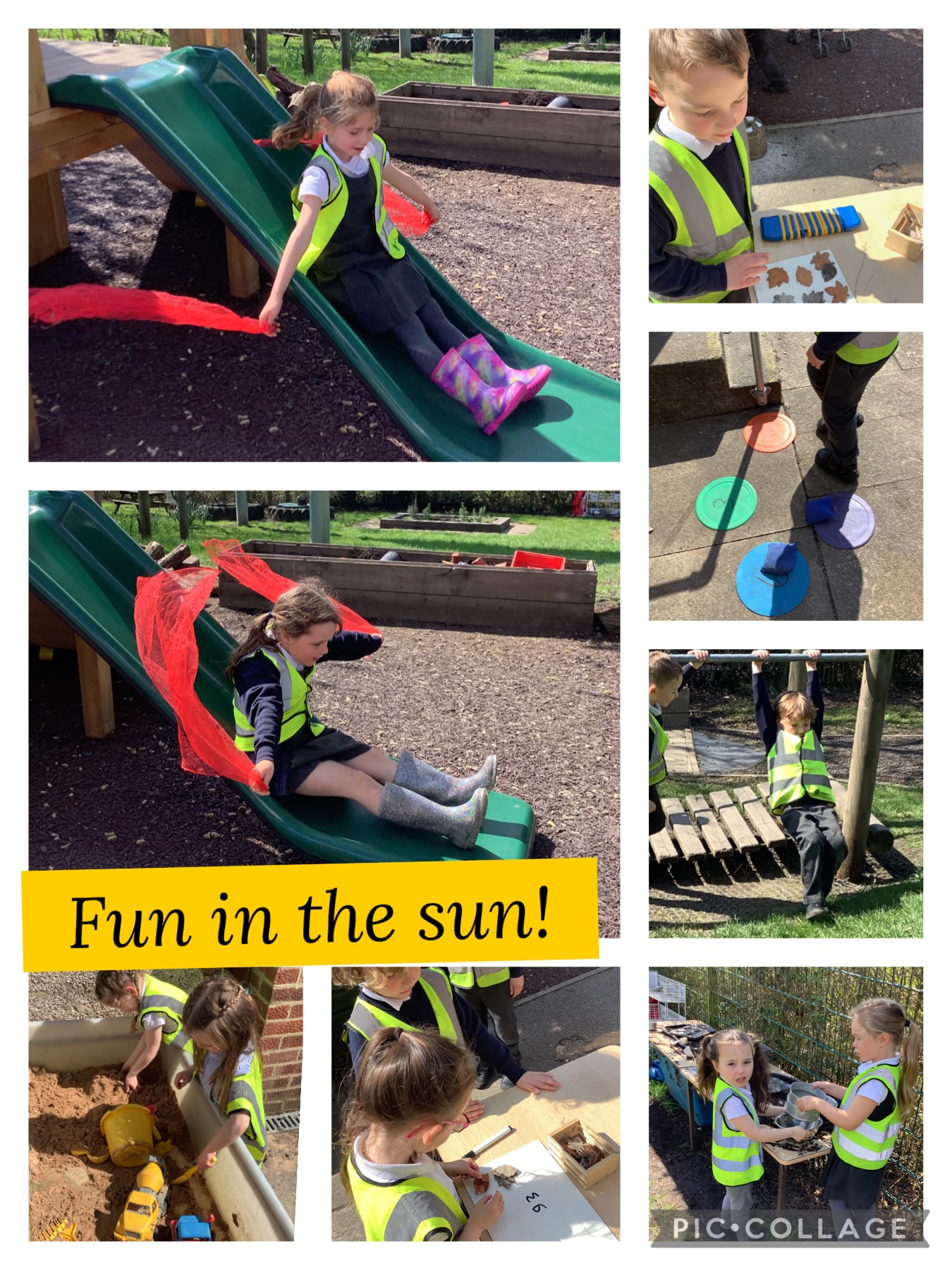
Spring has sprung – let’s get outside!
1,2B enjoyed playtimes and PE outside yesterday on the field. It was lovely to have the sun on our faces and space to run, throw and kick the balls as far as we could!


3,4 A Class News
We have got straight back into the swing of things this week in Year 3,4!
In reading and writing, we have been enjoying (and meanwhile, getting very hungry) looking at Michael Rosen’s ‘Chocolate Cake’. We’ll be continuing with this poem next week.
In Maths, in both year groups we are continuing our work on fractions.
In Science, we have started our new unit on forces and magnets and in Topic, we have begun learning about Leeds West Indian Carnival.
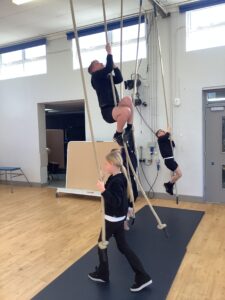
In P.E, 3,4 A enjoyed a lesson using the apparatus practising our climbing, balancing and teamwork skills – please see some pictures below.
Please help at home this half-term by continuing to regularly listen to your child read and supporting them with practising their spellings and times tables.
We are scientists
We have started some new science learning this week, all about living things and their habitats. The children were introduced to their new vocabulary:

We spent the lesson learning about how plants reproduce. This incorporated some of our new vocabulary – pollination, fertilisation and reproduction. We dissected a tulip flower in order to see the different parts of the plant. The children could then identify the parts using scientific vocabulary and see the function of each part. What part does it play in reproduction?

Help at home: have a go at learning the vocabulary. Give your child one of the words, can they explain the meaning? Can they draw what the word represents?
Reading – Amazing Grace
We are using the book Amazing Grace, by Mary Hoffman, in our reading and writing lessons. It is all about a girl who is told she can’t be certain things – but she doesn’t let this stop her.
Help at home by reading or watching this book, discussing it and particularly talking about how you can do anything you want if you put your mind to it.
