Where we live
Phonics
This week, the children have learnt the phonemes (the sound a letter makes) ck, e, u, r. The introduction of ‘ck’ was also our first digraph (two letters that make one sound) The children have been listening to and saying words that begin or end with these phonemes. They’ve also been practicing writing the graphemes (the written letters).
You may choose to play an I Spy game at home using these new phonemes.
Maths
This week has been all about the number three! We’ve been noticing patterns of three, making three collections and representing three!

Maps- Where we live
We’ve loved exploring maps of our local area- Scholes!
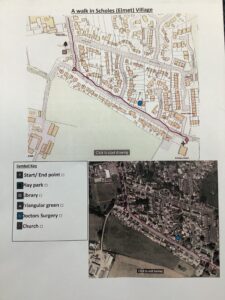
We started the week by looking at a simple map with symbols and a key. We watched a video on how to use maps.
On Wednesday, we went for a local walk. We followed our own map and stopped at all the points along the way:

On the walk, the children discussed things they noticed or remembered about our area:
“My house is up there!”- Jacob
“I used to go to that doctor’s and now I go to a different one”- Arthur
“My uncle lives near here!”- Jack
“I went to this church when I was a little kid!”- Alfie
“I’ve been here for ‘Little Fishes’ (church)”- Bethany
“This is to remember people in the war” (War memorial)- Georgie
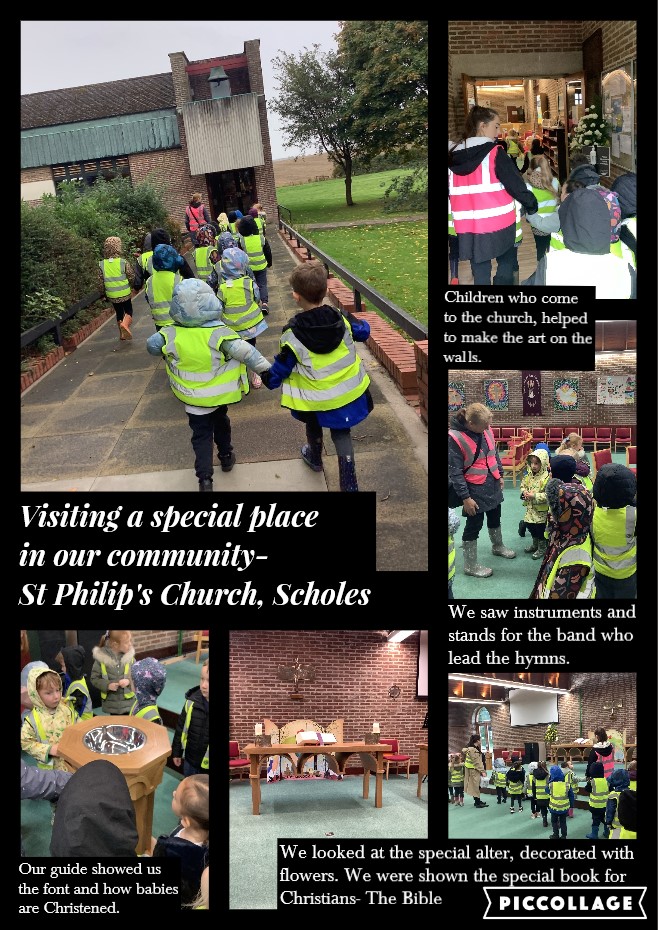
We finished our walk at a special place in the Scholes community- St Philips Church. The children discovered the names of different objects and areas within the church. They also looked at the Harvest Festival activities and collections that are currently taking place.
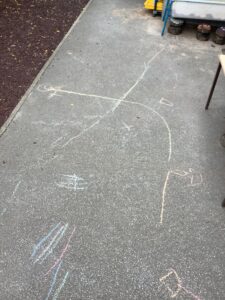
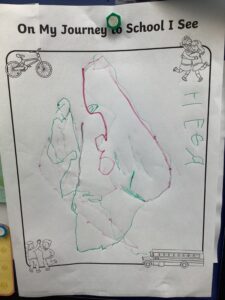
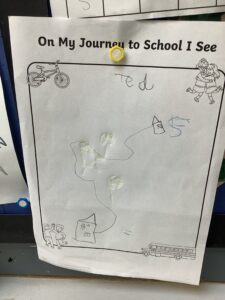
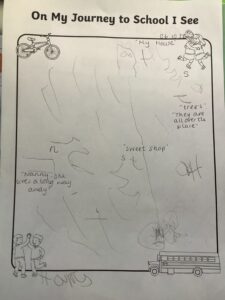
Throughout the week, the children have been having a go at drawing their own maps of the street that they live on. Some of them have even been drawing big maps with the chalks outside!


Did you know?…
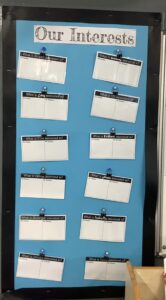
Did you know that we have a special ‘Parent Partnership’ board in both Sunshine and Rainbow Class? Here, we note down what your child has been interested in at school. There’s also a space for you to write your child’s interests from home. There are lots of ways you can share interests from home. You can come in and write on their special postcard or you can fill in a ‘learning at home’ or ‘wow sheet’ and bring it in. You can find the sheets here

Poetry Picnic
Each week, we will be learning a new poem. We will recite this poem each day. By saying the poem out loud we can focus on the sounds and rhythm of each word or line.
This week’s poem is Falling Apples

Ask your child to tell you the poem at home! Can they remember it by heart?
Learn at home phonics sheet
Today, your child has come home with a ‘learn at home’ phonics sheet. The sheets link to our current learning in phonics and will be sent home each Friday. Please support your child by practising their new sounds and reading skills at home.
Reminders
Funky Phonics Stay and Play 12.10.22
Please only attend if you have sent in your RSVP slip or have spoken to the class teacher. This is to ensure we have adequate space in the classroom for teaching. We can’t wait to share our learning with you!
Individual School Photos 12.10.22
Please send your child into school in school uniform, not PE kits on this day. Don’t forget to bring your swimming kit too, if your child is in Rainbow class.
1A Science – food chains
In Science, we have been learning about food chains. The children have enjoyed making their own.


A hunt around school
As biologists, we searched the school grounds for invertebrates. We had an enjoyable time turning over stones, logs and plant pots to find living things. Once we had gathered our data and analysed it, we turned it into a bar graph. Can you see what we found?


Here is a glimpse of our spelling and PE lesson too. We were focusing on different suffixes in spelling and played the game four-square in PE.


Living and Learning: I respect others
During our Living and Learning and Circle Time sessions this week, we have been focusing on what respect means to us, and how we can show respect to others. Here’s what some of our pupils have said about what respect means to them:
Helping my friend if they have hurt themselves in the playground
Looking at someone when they are speaking to you
Treating others how we want to be treated
Being kind and saying please
Not leaving people out in games
Respect comes in many different shapes and forms. To show respect, we have to understand that we are all different. We all possess characteristics, traits and values which make us unique. Our discussions this week have seen us explore the idea of our Protected Characteristics (Age, Disability, Race, Religion/Belief, Sex (Gender), Pregnancy and Maternity, Sexual Orientation, Gender Reassignment and Maternity and Pregnancy); how the law prevents discrimination against us for these reasons, and look at real-life case studies to understand this in more detail.
Our pupils now have a greater understanding of the wider world around them, a stronger appreciation of an individual’s unique characteristics, and can demonstrate respect in many different ways.
Y2 Spellings
We’ve had another fantastic week in 2C so far. I have been extremely proud of how each child has been practising their spellings in preparation for their spelling test every other week. Here is our current spelling list:
- of
- once
- one
- our
- pull
- push
- put
- said
- saw
- says
Help at home by practicing sounding out spellings with your children. Why not get them to use coloured pencils or pens? This will help them to memorise spellings more easily and will encourage neat handwriting!
Have you lost yourself in a book this week?
Well done to all those children who are reading regularly at home – you are fantastic! We set the expectation that reading should be taking place on a daily basis and some of you have really risen to the challenge. Reading regularly helps improve knowledge, fluency and vocabulary so it’s well worth the investment.
Don’t forget that the children are all set a target page each week and a task for them to complete in their journals. These need to be returned to school every Friday. Thank you to all the parents who are supporting their children with reading at home and signing their journals – you’re making a real difference. If you need some help on how to support your child with their reading, please pop in for a chat and we will be happy to help.
Thanks again to all those avid readers!
English – reading and writing
We have made a strong start to our English lessons since coming back after the summer holidays. Phonics lessons started on day one and we have been using our phonics to support writing too.
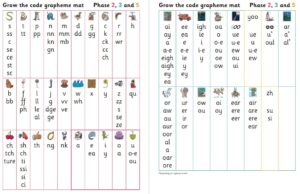
We use a ‘grapheme mat’ (letters and groups of letters and the sounds they make) to support our reading and writing.
In phonics, we learn how the same letters make different sounds and different sounds are made by the same letters! It can be very confusing.
Help at home by reading with your child regularly. If you have any problems logging in to the eBooks, contact your child’s class teacher.
Science: microbes
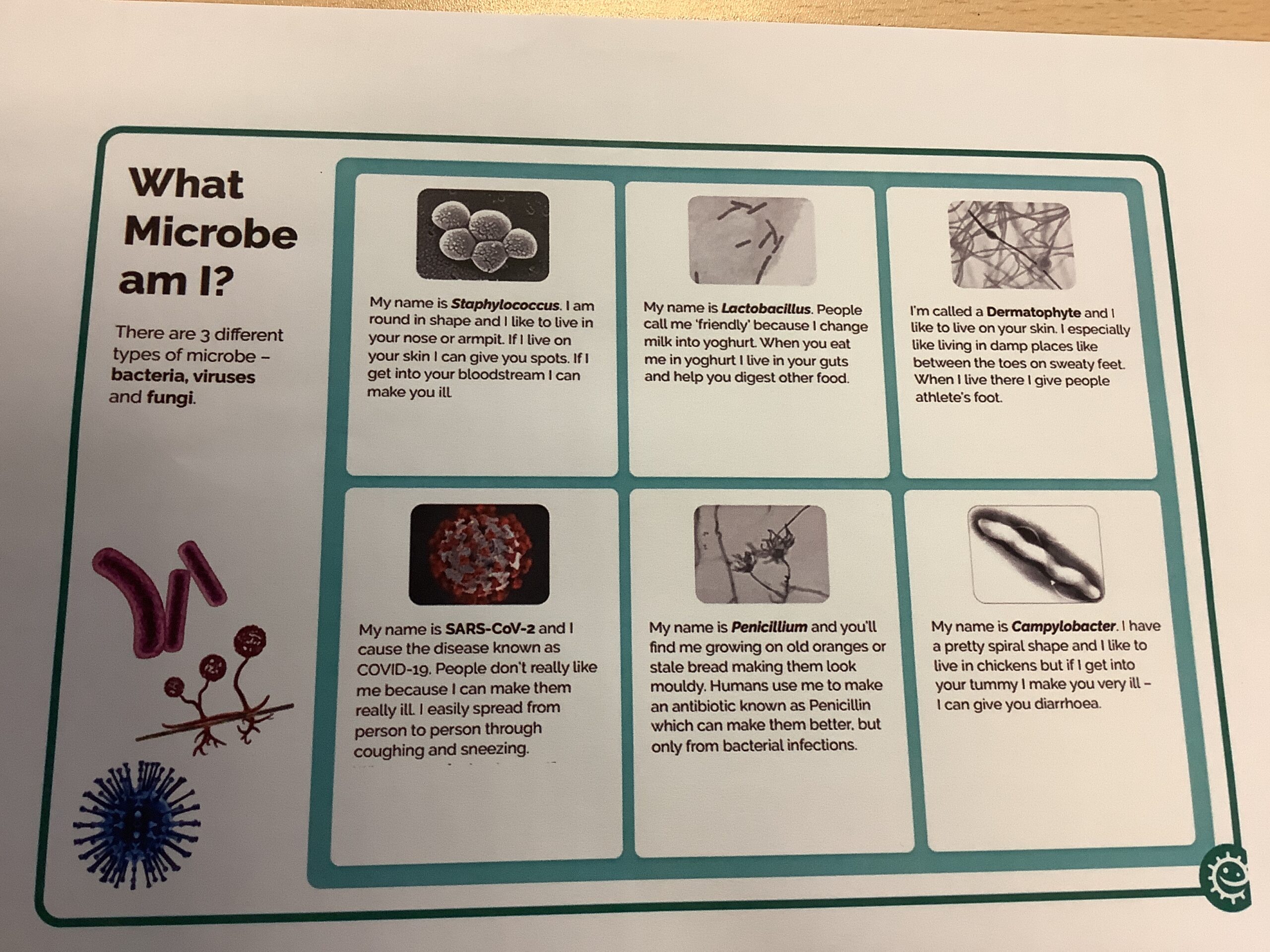

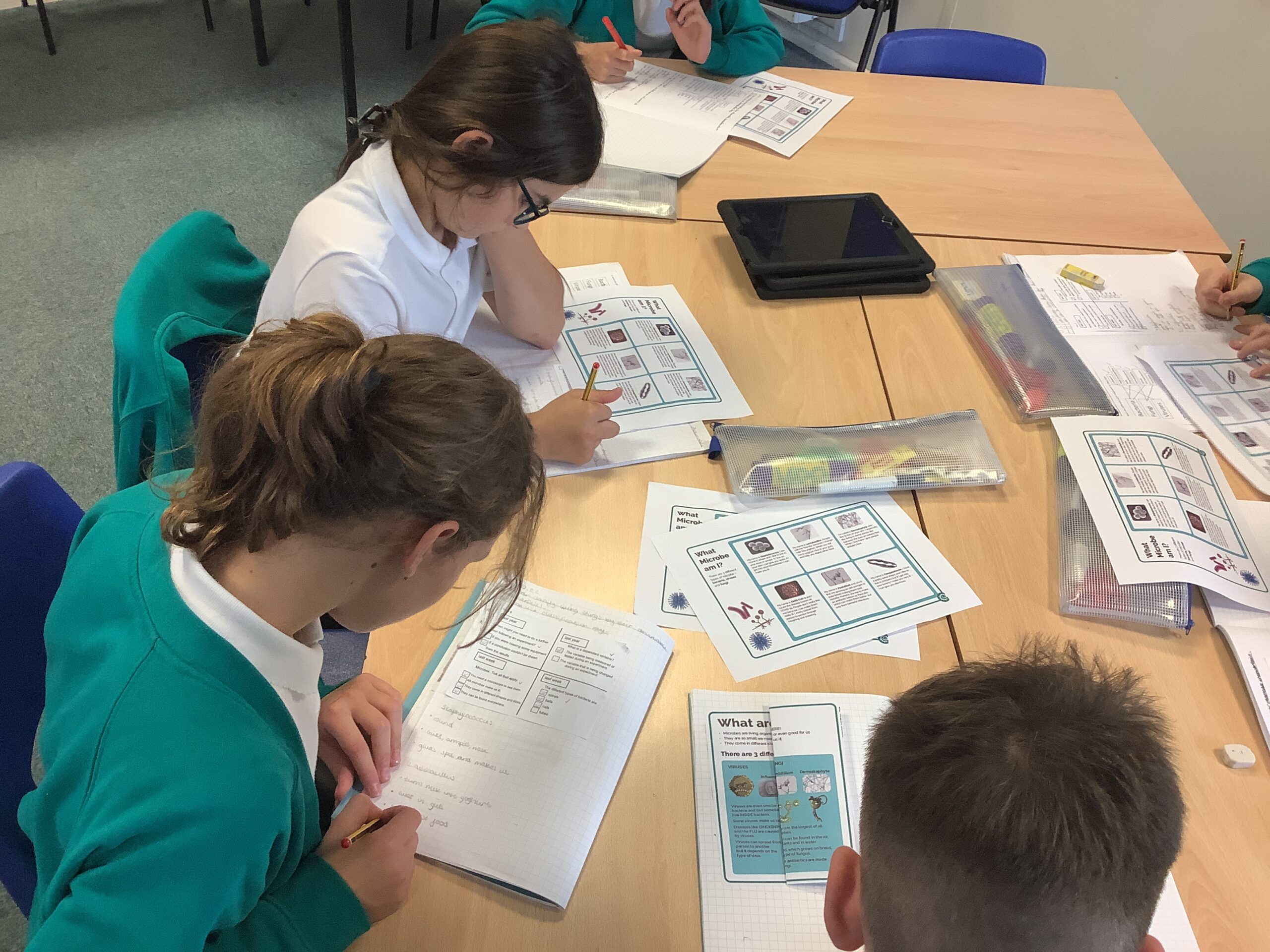

This weeks science lesson focused on microbes. There are three different types of microbe – bacteria, viruses and fungi. These are micro-organisms – they can only be seen under a microscope. The children researched six different types and made notes on each one. This linked well with our note-taking lessons in writing last week. The children had to identify the important information and record this in note form using bullet points and sub-headings. They were able to identify which microbes were friendly and which posed as a threat to our health. Following their research, they’re going to create a classification key.
Maths – place value
Year 1 and 2 have been focusing on place value for the past few weeks. Knowing the order of numbers, what each digit is worth and how numbers can be partitioned (split up) are all essential.
Year 1s are sorting, ordering and comparing numbers using great than > and less than < symbols.

Year 2s are using base 10 equipment (tens and ones) place value charts, part whole models and Numicon to represent and partition numbers.
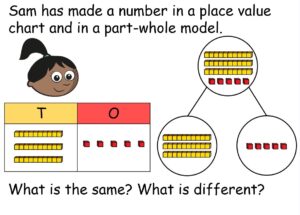
Help your child at home by talking about numbers, comparing them and finding out how many tens and ones a number has.
Homework: weekly check
Each week, children have a times tables and spelling check. This helps us to tailor our teaching to meet the needs of individual questions. In year 5/6, we have 8 questions for times tables knowledge and 8 for spelling.
As you can see in the picture, the times tables check covers multiplication, division, inverse calculations and scaling by 10 or 100. Use this as a guide when working with your children at home. Little and often will help children to retain key facts. Perhaps, while cooking, walking to school or just after a five minute daily session on Timestables Rockstars.
