
The Very Hungry Caterpillar
This week, we have been reading The Very Hungry Caterpillar. As a class, we created a story map to help retell the story. We used time connectives to develop our story language.
First, Next, After that, Finally, 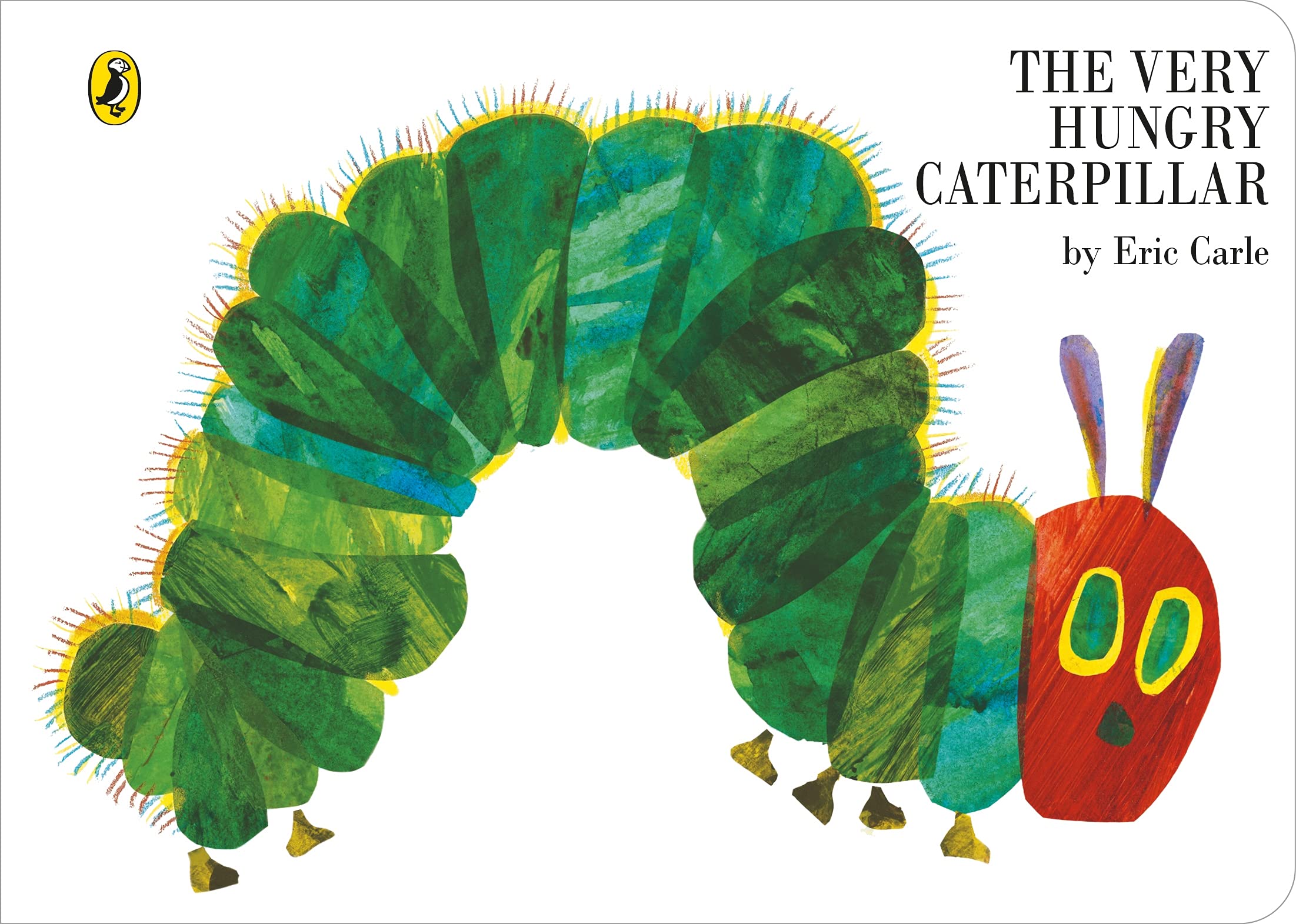

In our writing, we have been composing sentences to retell main events of the story. Some children chose to adapt the story by changing the main character and food.

The reading challenge this week was to create a story map.

Maths
This week, we have continued to develop our subitising skills (see the quantity without counting) in complex arrangements.
We have explored creating arrangements of 6. The children explained how they could see 6.


Phonics
This week, we have continued to learn phase 4 words such as frog, shift, chimp and drum.
We’ve also learnt more phase 4 tricky words; some, come, love and do
Help at home- Please continue to work through the weekly learn at home phonics sheets, throughout the Summer term. We’ll continue to send these home each Friday.
Poetry Picnic
Each week we will be learning a new poem. We will recite this poem each day. By saying the poem out loud, we can focus on the sounds and rhythm of each word or line. We talk to the children about how this can help us become better readers. This week’s poem is called Under a Stone. Watch here.

Living and Learning
I know the importance of sleep.
The children thought about different reasons we need sleep and how to get a good night’s sleep.
It can sometimes make your eyes sting. (screens)
It wont help her brain. If she’s distracted she wont go to sleep. (iPad)
You shouldn’t have any screen one hour before bed.
If you put a calming song on your might go to sleep.

Science
The children have been amazed at the rapid growth of the caterpillars. Each day, we have observed how they have changed and recorded what we noticed

They are massive now!
They have got too big for their skin.
They are moulting.
Reminders and Dates
SWIMMING DATES- Summer 1
Rainbow Class- 1 May, 15 May
Sunshine Class- 8 May, 22 May
The Bad-Tempered Ladybird
We’re excited to be back together for a happy and healthy Summer term!
This half term is called Life on Earth. We’ll be exploring minibeasts, wild animals, farm animals and the human body.
The Bad-Tempered Ladybird
This week, we’ve been reading The Bad-Tempered Ladybird by Eric Carle.


There was lots to explore in this story; feelings and appropriate behaviours, clocks/time and the comparative sizes of animals.
Frustrated is our ‘word of the week’.
In our writing, we’ve written things that make us feel happy and things that might make us feel sad or angry, like that bad-tempered ladybird!
Art; clay modelling
We’ve been using clay to make minibeasts. We looked at pictures and photos of minibeasts, before making our models. We had spiky caterpillars, wiggly worms and crawly spiders to name just a few! Clay is great for our fine motor skills. We have to work hard to mould, pull, press and shape. We’ll be continuing with our clay creations into next week.

Maths
In Maths, we’ve been counting beyond ten- to twenty. We’ve been suggesting ways to make counting easier, when we are faced with a lot of objects to count.
We’ve also been counting things that cannot be moved, or things that cannot be seen (such as sounds/actions)

In provision, we explored doubles through doubling ladybirds and recorded our findings.

Help at home- Challenge your child to count more than ten objects. Can they count the pegs on the washing line? Can they count toys in their toy box? Can they count books on a book shelf? Don’t forget to send in photos of counting at home!
Caterpillars
We’ve got some new additions to the classroom, as this week some very tiny caterpillar friends arrived! We’ve been observing them and have been writing about the caterpillar life cycle. Some of us also wrote down how we will keep them safe. We can’t wait to see them change and grow over the next few weeks.

Phonics
Summer 1 week 1 has been an introduction to reading phase 4 words. We’ve also learnt our first phase 4 tricky words; said, so, have, like
Help at home- Please continue to work through the weekly learn at home phonics sheets, throughout the Summer term. We’ll continue to send these home each Friday.

Poetry Picnic
Each week we will be learning a new poem. We will recite this poem each day. By saying the poem out loud, we can focus on the sounds and rhythm of each word or line. We talk to the children about how this can help us become better readers. This week’s poem is called Pitter Patter

We talk about how a poem sometimes has rhyming words and sometimes doesn’t. Can your child tell you the rhyming words in this week’s poem? We also talk about how a poem can have a fast rhythm or a slow rhythm.
click below to watch us recite this week’s poem!
More pictures of our learning this week…


Reminders and Dates
SWIMMING DATES- Summer 1
Rainbow Class- 1 May, 15 May
Sunshine Class- 24 Apr, 8 May, 22 May
Rabbits don’t lay eggs!
Rabbits Don’t Lay Eggs
This week, we’ve been reading Rabbits Don’t Lay Eggs by Paula Metcalf.

Top tip for watching YouTube with your child: go to the settings cog along the play bar and turn off auto play – this avoids an inappropriate clip coming up automatically, and helps to discourage your child from passively watching clip after clip.
The story begins on a farm, with a rabbit named Rupert. All he wants is to be useful but unfortunately, he struggles to find anything he’s good at. Luckily, he soon finds an unexpected job on the farm.
Our ‘word of the week’ is creation – something that is made or created.
“Come look at my creation!”
“The creation of new life, like lambs.”
We also spotted some other adventurous words in the story.
Giggled to laugh lightly and repeatedly (a lot) in a silly way.
“When I told a knock-knock joke. Finlay giggled!” said Rupert.
Glumly to look unhappy and disappointed.
We also talked about writing the story from the farmers perspective. How would he feel waking up to no vegetables? To seeing Rupert running across his field? The children wrote some fantastic stories!
Maths
In Maths, we have been sorting objects by attributes.
They are sorted by colour.
They’re big and they’re small.
Those bears have scarves and they don’t.

Poetry Picnic
Each week we will be learning a new poem. We will recite this poem each day. By saying the poem out loud, we can focus on the sounds and rhythm of each word or line. We talk to the children about how this can help us become better readers. This week’s poem is called A Tiny Seed.


We talk about how a poem sometimes has rhyming words and sometimes doesn’t. Can your child tell you the rhyming words in this week’s poem? We also talk about how a poem can have a fast rhythm or a slow rhythm.
We always look at two words in the poem and share the definition. This week, we looked at the following words.
sow – plant (seed) by scattering or putting in soil
shower – a short period (time) of rain
We finished the week with lots of Easter themed activities. The egg rolling competition was a real highlight of the day!


Home learning
Can you write a daily diary about your half term? A sentence a day would be fantastic! Please bring your diary in to share when we return to school.
Writing reminder
Remember, it is okay for things to be spelt phonetically. It is important your child grows into an independent learner. Encouraging your child to write the words as they sound rather than always spelling correctly is important. It encourages your child to use their own skills – rather than copy from an adult.
It is important you do not let your child simply copy your writing. They need to use their phonics skills to write. Here is an example of a child’s writing in Reception.

Have a fantastic half term!
Reminders and Dates
SWIMMING DATES- Summer 1
Rainbow Class- 17 April, 1 May, 15 May
Sunshine Class- 24 April, 8 May, 22 May
A Tiny Seed
This week, we’ve been reading The Tiny Seed by Eric Carle.
 Some of the children recognised the illustrations, knowing that the author also wrote The Very Hungry Caterpillar.
The story follows the journey of a tiny seed, tracking its journey through the four seasons.
We decided to go on a season walk to find signs of spring. The children spotted buds, leaves, blossom, bees and even the sun.

Miniscule is our ‘word of the week’. We’ve been learning that miniscule is even smaller than tiny!
Maths
In Maths, we’ve been doubling! Ask your child explain how we find doubles.


Phonics
Spring 2 week 5 has been a review of phase 3 sounds. We’ve been reading longer words, words with s in the middle /z/ (like ‘visit’), words ending –s and words with –es at end /z/ (like ‘foxes’)
Poetry Picnic
Each week we will be learning a new poem. We will recite this poem each day. By saying the poem out loud, we can focus on the sounds and rhythm of each word or line. We talk to the children about how this can help us become better readers. This week’s poem is called Hungry Birdies.
We talk about how a poem sometimes has rhyming words and sometimes doesn’t. Can your child tell you the rhyming words in this week’s poem? We also talk about how a poem can have a fast rhythm or a slow rhythm.
click here to watch us recite this week’s poem!

Road safety
A visitor came to talk to us about how to keep safe around roads. We discussed what should be on the roads and what/who should be on the pavement. We talked about how seatbelts, helmets, zebra crossings and holding our grown-up’s hand keep us safe. We even sung a seatbelt song to help us remember to always wear a seatbelt in the car.

Science
This week, we have explored seeds and stones that are found in fruits. We looked inside a kiwi, melon, pepper and nectarine. The children were able to describe what they discovered and drew their observations.
Loads of seeds. Myla
It’s a nectarine! Sienna
It’s a tiny seed. Albie
Teeny tiny kiwi seed! Frankie

Reminders and Dates
Learning Journey Drop in Tuesday 26 and Thursday 28 8.45-9.15 or 3.15-3.45
Every child in Reception has a Learning Journey book that celebrates their learning – this might be with photos, our observations, and your updates from home. Come in and share with your child their Learning Journey so far.
Jack and the Beanstalk
It’s been another busy week in reception!
Jack and the Beanstalk
This week, we’ve been reading the traditional story ‘Jack and the Beanstalk’.

We discussed how this story has been re-told many times and some versions of the story are different. Just by looking at the front covers, we could spot similarities and differences.
This week, our word of the week was gigantic.
Planting a (magic) bean
After listening to the story, the children all agreed that we should plant our own bean.

We then wrote instructions to explain to others how they could plant a bean too!

Music
Each week in music, the children listen to a piece of music and respond to it; what it reminds them of, or what they notice. This week’s piece was non-vocal music, Frog’s legs and dragon’s teeth by Bellowhead:
“it’s faster” (than last week’s music)- Finlay
“It goes fast, then slow, then fast”- Harry
“I like sandstorm…that has no voices in too. It’s on my playlist”- Oliver Gr
The children then watched a video of the band performing and named the instruments.
Maths
In Maths, we’ve been exploring the composition of number 7.
We’ve also used our magic bean machine to combine two numbers.

Class Assembly
Thank you to parents and carers who were able to join us for our class assembly on Thursday. We hope you enjoyed the journey through our day in Reception! If you’d like to see the slideshow of photos shown in the assembly, please click here

Comic Relief; Red Nose Day
Thank you to everyone for participating in our non-uniform day for Comic Relief and for your kind donations.
Phonics
Spring 2 week 4 has focused on longer phase 3 words, words ending in –ing and compound words (words made of two words i.e. rooftop/farmyard) We review tricky words daily.
In provision, we’ve been making beanstalks by reading tricky words!

Tricky words can be just that-tricky! We’ve previously introduced a few fun games you can play at home to practice tricky words. Here’s another you could try.
Tricky Word Jigsaw
A game to help the spelling of tricky words
- Write 5 tricky words on paper.
- Chop the words into individual graphemes.
- Ask your child to reconstruct the tricky words, by calling them out one at a time.

It doesn’t need to be as fancy as the picture above, a plain piece of paper and hand-writing the words will work just as well!
Poetry Picnic
Each week, we will be learning a new poem. We will recite this poem each day. By saying the poem out loud, we can focus on the sounds and rhythm of each word or line. We talk to the children about how this can help us become better readers. This week’s poem is Spring Wind.

We talk about how a poem sometimes has rhyming words and sometimes doesn’t. Can your child tell you the rhyming words in this week’s poem? We also talk about how a poem can have a fast rhythm or a slow rhythm.
click here to watch Reception recite this week’s poem
Reminders and Dates
Easter Disco 22.03.24 – 3.15 -4.15
The Friends of Scholes have arranged the Easter Disco after school. If you would like your child to attend the disco, payment should be made on the Gateway app. Collection as usual from the classroom door.
World Book Day 2024
Thank you for your participation whether it was dressing up (everyone looked amazing!) sharing books at our stay and read or reading books with your child at home.


Hundred Decker Bus
A fantastic trip to the Railway Museum!
On Monday, the children had a fantastic time at the Railway museum. They were very excited to go on their first ever school trip – especially travelling there by coach! A few members of the public commented on how well-behaved the children were. Well done, Reception class!
The children enjoyed looking at different trains and making comparisons of old and new. They had lots of fun watching the miniature railway and it led to lots of great discussions about trains, tunnels and transport. The children enjoyed sitting on the Japanese Bullet train – they particularly liked the fact it goes very fast (150-200mph).
To end our fantastic trip, we sat in the upper gallery and viewed the trains across the museum. We then sketched the trains we had seen – the children drew some fantastic sketches!


The Hundred Decker Bus
This week, we’ve been reading another ‘Hundred Decker’ story by Mike Smith. The Hundred Decker Bus
In this story, a driver who is bored of his daily routine decides to take himself and his passengers on a long ‘adventure’. As more people get on the bus, more decks need to be built!
Linked to the story, we’ve been comparing cities/towns to the countryside, discussing similarities and differences. Countryside is our ‘word of the week’.

Top tip for watching YouTube with your child: go to the settings cog along the play bar and turn off autoplay – this avoids an inappropriate clip coming up automatically, and helps to discourage your child from passively watching clip after clip.
Computing
This week, we’ve been using Bee-bots. Bee-bots are an early coding resource. Children have to program the bee using directional and ‘GO’ buttons. They have to pre-plan the algorithm they need to enter, to successfully get the bee to its intended location.


Maths
In Maths, we’ve been comparing numbers and noticing whether change creates a number that is more or less than another.
In provision, we used the ‘bus stop’ number story to explore subtraction (creating less) and recorded our number stories.
Phonics
Spring 2 week 3 has been a review of phase 3 sounds, reading words with two or more digraphs (2 letters that make 1 sound). We review tricky words (a word you can’t sound out – you just have to know it) daily.
Tricky words can be just that-tricky! We’ve previously introduced a few fun games you can play at home to practice tricky words. Here’s another you could try…
Tricky word stick person (a modified version of the ‘hangman’ game)
We often play this game in class. Write the correct number of dashes for your chosen tricky word and let your child make guesses. Encourage your child to use letter names rather than sounds for spelling tricky words. Draw a part of the stick man for each incorrect guess- you can give extra chances by adding a hat, shoes, gloves etc. to the stick person!

Poetry Picnic
Each week we will be learning a new poem. We will recite this poem each day. By saying the poem out loud, we can focus on the sounds and rhythm of each word or line. We talk to the children about how this can help us become better readers. This week’s poem is the traditional nursery rhyme Pat-a-cake, Pat-a-cake.
We talk about how a poem sometimes has rhyming words and sometimes doesn’t. Can your child tell you the rhyming words in this week’s poem? We also talk about how a poem can have a fast rhythm or a slow rhythm.
Music
This week, the children have been listening to Gustav Holst – Mars. We switched off the lights, laid in the dark with our eyes closed and listened to the music. The children really enjoyed the time to stay still and reflect on the music they were listening to.
“It’s like a movie” Kitson.
“It’s like a storm” Sienna.
“When it was the end I was curling up because it sounded scary” Eli.
“It made me happy because of the little bits and loud bits together” Myla.
“The quiet bits made me tired” Liezah.
“I heard trumpets” Harry.
Reading reminder
Children should be reading fluently by the time their book is issued home on Thursday. Your child will have read their book at least 4 times at school – this is where the teaching of reading happens. The aim of reading sessions at home is to celebrate their reading. To showcase what they have learnt that week and for your child to recognise themselves as a ‘reader’.
If you believe your child is reading from memory you can ‘spot check’ particular words in a sentence or play games with the e-book (such as spotting tricky words).
Remember to encourage reading for pleasure through sharing library books, magazines and other texts at home.
Reminders and Dates
Reception’s Class Assembly- 14.03.23 2.45pm You are invited to our class assembly, where we’d love to share our learning with you.
Hundred Decker Rocket
This week, we have continued to explore our topic ‘Let go’.
We have been reading the book The Hundred Decker Rocket.
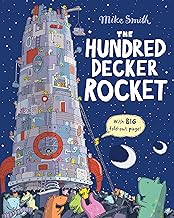
This story is about a girl called Ivy who sets off on a mission to space. On the way, she meets some very messy aliens. When her rocket breaks down, all the aliens help to fix it and make their own deck.
In provision, the children were challenged to write their own sentences about a picture from the book or use their knowledge of the story.

Maths
This week, we have continued to engage in activities to draw attention to the purpose of counting – to find out ‘how many’ objects there are. We revisited the concept of cardinality – the last number in the count tell us how many things there are altogether.

Phonics
This week, the children have reviewed air, er and longer words that contain double letters.
Write these words on paper and ask your child to underline the double letters before reading.
hammer shimmer cannot chatter muffin
Tricky words can be just that-tricky! We’ve previously introduced a few fun games you can play at home to practice tricky words. Here’s another you could try.
Secret password
Write different tricky words on paper and stick them next to different doors around the house.
Each time your child enters or leaves a room they must press and say the tricky word password.

Poetry Picnic
Each week, we will be learning a new poem. We will recite this poem each day. By saying the poem out loud we can focus on the sounds and rhythm of each word or line. We talk to the children about how this can help us become better readers. Watch here

Music
We began our lesson this week by listening to Beyond the Sea by Robbie Williams.
The children were amazing at recognising the instruments they could hear such as drums and the piano.
Then, they used xylophones to make low and high sounds.
Reminders and Messages
Monday 04 March- Class Trip to The National Railway Museum.
World Book Day 2024- Thursday 07 March Please join us in the classroom (9.00-10.00) where you can relax and read books with your child. We’d also like your child to share their favourite book with their friends. Please send your child into school with their favourite book and please ensure the book is named. As stated on the school calendar, this is a dressing up year. Dressing up is optional. Thank you.

These dates are also stuck to your child’s classroom door or window to view whenever needed.
Let’s GO!
We’ve sprung into Spring 2 with great excitement for the term ahead! We are very impressed with how both Sunshine and Rainbow class have shown a readiness to learn. The children have been really excited to share with their friends all the adventures they have been up to during half term. Outside, it’s been pretty rainy and drizzly but we’re looking forward to spotting signs of the new Season.
The Train Ride
This half term is called Let’s Go! We’re starting with a focus on transport. This week, we’ve been reading The Train Ride by June Crebbin.

This story is about things that are seen out of the window, on a train journey. We noticed that the rhythm of the book’s repeated/rhyming lines start fast and repetitive (much like the sound of a train chugging along a track) and then as the train approaches the station, the lines become longer and the pace slows down until the train reaches is destination. Destination is our ‘word of the week’.
We’ve been discussing journeys that we have been on, either on trains or other modes of transport and what destinations we were going to. We’ve been writing about what we might see out of the train window.
The children wrote some fantastic sentences about what they can see out of their window. Lots of children remembered to add in finger spaces too – well done!

Historical links
We looked at pictures of the early steam locomotive- Robert Stephenson’s Rocket. We compared it to the trains we use today.

In the discovery area, we’ve been ordering images of trains from oldest to newest.

Maths: Comparison
We’ve been comparing groups of objects and toys, saying which has more and which has fewer. We’ve been using our mathematical reasoning to explain why size, colour and other factors do not matter when comparing ‘how many’.
No, Mrs Flynn, Sam still has more aeroplanes than Pat. It doesn’t matter about the size or colour. What matters is the amount you count!
In the classroom, children have been making 6 using Numicon frames.

ICT- Programming a BeeBot
We’ve been learning how to programme a BeeBot. This week we’ve been ‘having a go’ at pressing the buttons and making them move. We’ll be continuing our learning over the next few weeks, learning about algorithms and programming. We will learn to use sequences of instructions, to programme the BeeBot to reach a destination.

Phonics
Spring 2 week 1 has been a review of phase 3 sounds: ai, ee, igh, oa, oo, ar, or, ur, oo, ow, oi, ear, in words and sentences. We review tricky words daily.
Tricky words can be just that-tricky! We’ve previously introduced a few fun games you can play at home to practice tricky words. Here’s another you could try.
Roll and Read
You will need a die for this game. You may wish to print the boards or display them on a screen.
- Roll the die
- Count the spots, match to the correct row
- Choose a word to read on the row
- Cover the word when read correctly
- Repeat


Who will be the first to complete a row?
PE
We are excited to continue having both swimming and Foot-Tech this half term.
Here is another reminder of the swimming dates:
These dates are also stuck to your child’s classroom door or window to view whenever needed.
Poetry Picnic
Each week we will be learning a new poem. We will recite this poem each day. By saying the poem out loud, we can focus on the sounds and rhythm of each word or line. We talk to the children about how this can help us become better readers. This week’s poem is Pancakes by Christina Rossetti
Click below to watch Reception recite this week’s poem!
We talk about how a poem sometimes has rhyming words and sometimes doesn’t. Can your child tell you the rhyming words in this week’s poem? We also talk about how a poem can have a fast rhythm or a slow rhythm. Can your child re-tell this week’s poem to you?

Reminders and Messages
Monday 04 March- Class Trip to The National Railway Museum.
World Book Day 2024- Thursday 07 March Please join us in the classroom (9.00-10.00) where you can relax and read books with your child. We’d also like your child to share their favourite book with their friends. Please send your child into school with their favourite book and please ensure the book is named. As stated on the school calendar, this is a dressing up year. Dressing up is optional. Thank you.
Sponsored maths challenge: Please see the Sponsored Tens Frame Challenge letter, which has come home with your child this week.
Swimming Spring 2
