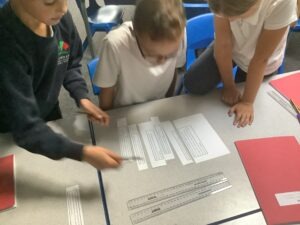
History Debate: Should the Elgin Marbles Return to Greece?

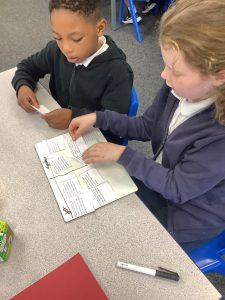
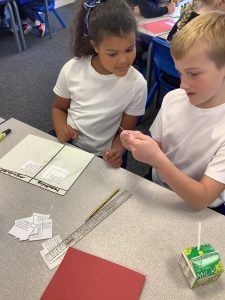
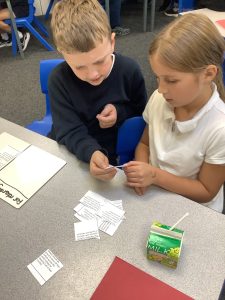
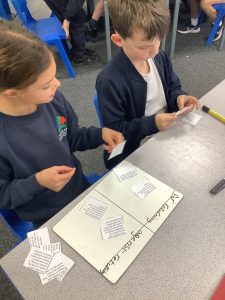
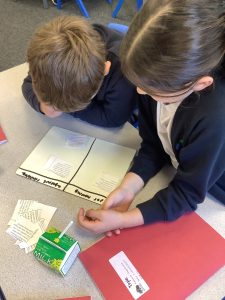
This week, the children explored the question of whether the Elgin Marbles should be returned to Greece. They worked together to sort different reasons for and against their return, discussing each viewpoint carefully. Using the reasons they had sorted, the children then expressed and justified their own opinions.
 
Help at home by asking your child about their point of view.

PE – hockey

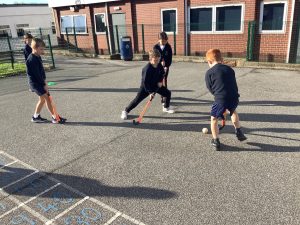
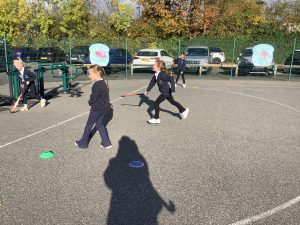
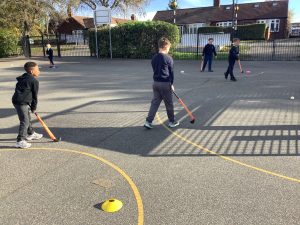
This half term, in PE, the children have played hockey.

They practised:

  • holding the hockey stick correctly
  • dribbling the ball
  • passing the ball in different ways
  • shooting accurately
  • defending
  • playing small games that use all of skills they have learned


08 October 2026

This is the second block of spellings for this half term. We will practice these spellings for two weeks. They will be tested on Friday 16th October.

Drop the ‘Y’ for an ‘I’

Spelling rule:
When a word ends in y, we often change the y to i before adding a suffix.

This week’s words:

  1. happily
  2. happier
  3. happiest
  4. easily
  5. easier
  6. carried
  7. worried
  8. copied
  9. tried
  10. cried

Remember: y → i before adding the suffix 

  • happy → happily
  • carry → carried
  • easy → easily

The children will be sent home a list of ten words that they will need to learn. Please help your child with this as it will have a positive impact in class. If you need any ideas on how to support your child, please see our Spelling Strategies Guide on our school website.


Living and Learning: rights and responsibilities

This week in Living & Learning we have been learning that we have the right to learn but a responsibility to be great learners. Here is a list of top tips we came up with to be great learners:

  • be in class on time
  • be prepared for all lessons
  • take good care of school property
  • complete spelling, reading and talk time homework
  • be ready
  • respect ourselves and others
  • listen and react well
  • doing our best – every day!

We also talked about Children’s rights in the UK. These include:

Help at home: watch this video and ask your child what their rights are

https://www.youtube.com/watch?v=x9_IvXFEyJo

History – Ancient Greece

   This half term, Year 3 and 4 are travelling back in time to discover the fascinating world of Ancient Greece.

We started our new topic by looking at timelines and finding out where Ancient Greece fits into history. We also explored the Golden Age of Ancient Greece and why this was an important time.

The children have been learning about Athens and Sparta and how different life was in each city state. We compared their education, daily life and the way people lived. The children then decided whether they would rather be an Athenian or a Spartan and explained their reasons through a debate.

Help at home by asking your child to tell you some differences between Athens and Sparta and which city state they would rather have lived in!


18 September 2026

For the next two weeks, our spellings are all two-Syllable Words Containing Double Consonants.

 Spelling rule:
Some two-syllable words contain double consonants. Look carefully at the middle of the word and listen for the short vowel sound. 

The children will be sent home a list of ten words that they will need to learn. Please help your child with this as it will have a positive impact in class. If you need any ideas on how to support your child, please see our Spelling Strategies Guide in the Learn More section of our school website.

  1. address
  2. different
  3. difficult
  4. opposite
  5. possible
  6. occasion
  7. occasionally
  8. suppose
  9. appear
  10. disappear

There will be a spelling test in school on Thursday 01 October.

D&T: sewing

This half term in Design and Technology, Years 3 and 4 have begun designing, making and evaluating their own fabric pouches. The children have been thinking carefully about the purpose of their pouch and who it is for. S

To make their pouches, the children have been developing their sewing skills. They approached the challenge with enthusiasm and determination.

We followed these steps:

  1. Thread the needle and tie a knot in the thread.
  2. Practise a running stitch using binka fabric.
  3. Tie a knot at the end of the stitch and trim any excess thread.

The children worked incredibly hard to sew carefully and accurately. They showed great perseverance, especially when threading needles and tying knots and it was wonderful to see them supporting one another and sharing tips. Their running stitches are already looking impressive. They should be very proud of their efforts.

Take a look at some of our fantastic sewing in action:

Help at home by: practising knot-tying with string or encouraging them to tie their own shoelaces can help to strengthen these important fine motor skills.

Topic: Why do tourists visit Venice?

This week, we became researchers in our geography lesson and used the iPads to find out more about the beautiful city of Venice. We were trying to answer the question…

Why do tourists visit Venice?

Before beginning our research, we discussed how important it is to use trusted websites with reliable information. We know that not everything online is accurate, safe or useful. As a class, we looked carefully at different websites and decided which ones would help us answer our question best.

The children thought about who created the website, who the audience was and whether the information included facts or opinions. We decided that websites designed for children, educational websites and well-known organisations were the most trust worthy to use.


During our research, we discovered lots of interesting facts about Venice. We found out that Venice is famous for its canals instead of roads, tourists travel on gondolas and water buses and the city is made up of over 100 small islands connected by bridges. We also learned that people visit Venice to see beautiful buildings, explore St Mark’s Square and enjoy the annual Venice Carnival.

Help at home: research a famous city with your child and discuss which websites you think are trustworthy. Can you explain why some websites are more reliable than others?

Spelling: Half Term 5

This half-term, our spellings are linked to the rules and strategies we’ll be learning in class:

  • alternative ways to write the ‘sh’ sound (ch, ss, ti, s)
  • alternative ways to write the ‘or’ sound
  • adding prefixes: in, im
  • adding prefixes: inter, anti, super
  • spelling patterns: ture, sure
  • homophones (words that sound the same but are spelled differently)

Each Friday, you’ll be tested on 8 of the words from the list below.

position inexperienced supernatural international machine
caught mention immaterial impossible moisture
infamous forward possession enclosure mission
people busy history pressure chef
measure therefore picture important special
thought improper quarter should naughty
fracture pressure leisure ordinary superior
beautiful anticlockwise because interrupt feature

Art Skills – Exploring tone in observational drawing

This week, during our art skills lesson, we focused on developing our observational drawing skills with a particular emphasis on using tone to create depth and form. Taking advantage of the sunshine, we moved our lesson outdoors where the children took the opportunity to draw from real-life surroundings.

Working outside allowed the children to engage more closely with natural light, shadow and texture.

Help at Home: Encourage your child to notice light and shadows as well as different textures and patterns around them. Talking about what they can see will help build their observation skills.