Phase 3,4 – Geography

JLT
Democracy is a key part of British Values and during this week, our classes have cast their votes for who they would like to represent their class on the JLT. We were absolutely overwhelmed by the number of children that wrote speeches. These were well written, full of ideas and showed off their best qualities such as leadership, good listening skills and initiative.
The votes were counted and the new members have been announced!
Here are our new members:
5,6A – Stanley
5,6B – Joseph
5,6C – Grayson
3,4A – Marshall
3,4B – Penny
3,4C – Jessica
2C – Oliver
1,2B – Oscar
1A – Harlow
Well done to each of you. I’m looking forward to working with you this year and can’t wait to get started.
Democracy -3,4C
This week, our Living and Learning statement is ‘I take part in democratic decisions’.
In class, the children had time to discuss and consider what makes a good leader, why people should vote for them and what changes they would make. The children then had time to create their speech if they wished to be considered as the Junior Leadership Team representative for 3,4C.
Yesterday, the children enjoyed voting in the hall using the ballot box.
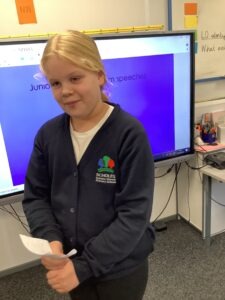
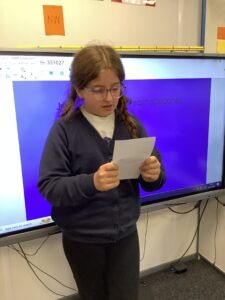
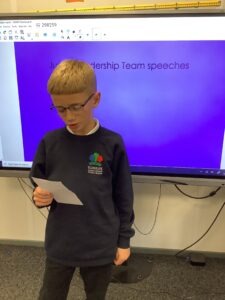
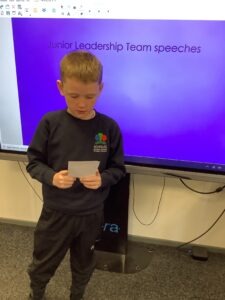
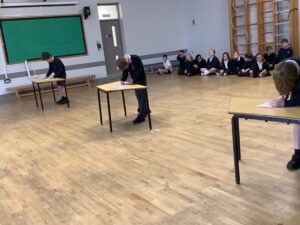
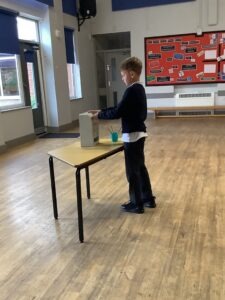
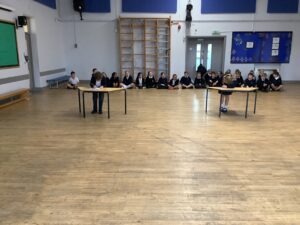
Well done to all the candidates that took part. We are really proud of you.
Maths – Bridging 100
In our recent maths sessions, we’ve been learning how to bridge 100 when subtracting.
This method will make calculations quicker and easier for us!
Eg:

Instead of counting back six times: 103, 102, 101 etc, we can use the following sentences to help us bridge 100.

Help at home: Give your child some questions to complete and chant the sentences above with them to help.
Phase 3/4 Poetry
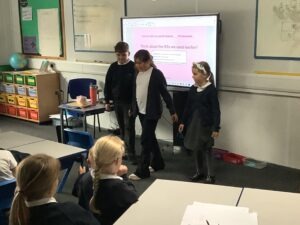
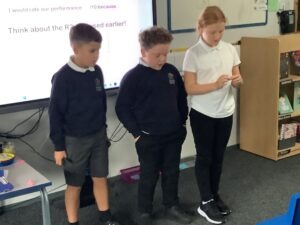
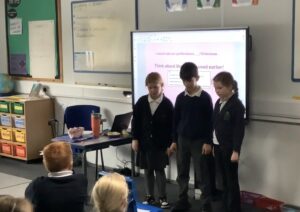
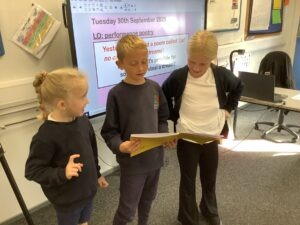
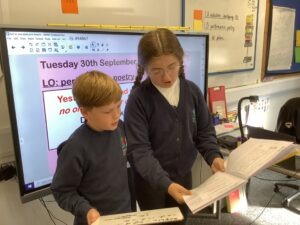
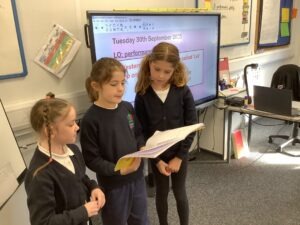
The children across the phase have been working hard to learn the poem ‘Let No One Steal Your Dreams’ by Paul Cookson.
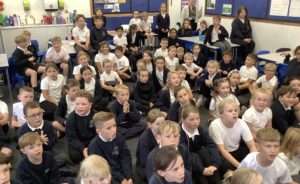
On Thursday, they will perform this poem together in a special assembly to celebrate National Poetry Day.
We have focused on voice projection and adding expression as we read.
In reading lessons, the children have explored the meaning of the poem and words they’re curious about.
Help at home by encouraging your child to recite the poem, adding expression and projecting their voice.
Living and Learning: Protected Characteristics
Over the next couple of weeks, we’re learning all about respect.
We’ll be revisiting what the protected characteristics are. These are characteristics that are protected by law to stop discrimination.
disability, race, gender reassignment, religion or belief, age, marital status, pregnancy, sex, sexual orientation
We can use this useful mnemonic to help us remember: DRGRAMPSS.
As well as reminding ourselves what the protected characteristics are, we’ll be exploring themes around them such as…
- Why are they protected?
- What would society be like if they weren’t protected?
- How do they link to the British Values?
We’ll also look at different scenarios where the characteristics aren’t being protected and see if we can identify the problem and the characteristic.
Help at home: Have a chat with your child about why we have protected characteristics and the importance of them.
Living and Learning: rights and responsibilities
This week, our L&L statement was: I know that rights come with responsibilities. This week, our Living and Learning statement is I know that rights come with responsibilities.
We have been learning that rights are the things that everyone deserves (like being safe, cared for and listened to) and responsibilities are the things we should do to make sure we and others can enjoy those rights (like following rules, showing respect and helping others).
We’ve had brilliant discussions about how we all have rights, however these come with certain responsibilities. We came up with some rights we have within school and the responsibilities that come with these:
- We have the right to learn and go to school. We have the responsibility to help others learn while at school and be good learners.
- We have a right to eat lunch but a responsibility to be respectful and polite to the lunchtime staff.
- We have a right to use the classroom equipment but a responsibility to look after it.
- We have a right to playtime but a responsibility to play safely and respectfully.
- We have the right to feel safe and a responsibility to make others feel safe.
We watched this video https://www.bbc.co.uk/bitesize/articles/zqgm7yc#zmghp4j and discussed what rights and responsibilities that we have at school and at home.
Help at Home: Talk to your child about their rights and responsibilities at home. For example, they might have the right to play with toys but the responsibility to tidy them away afterwards. Sharing examples together will help to strengthen their understanding.
Class Novel: Podkin One-Ear
Our class novel this term is Podkin One-Ear by Kieran Larwood.

Help at home: ask your child to summarise what has happened in the story so far.
Can they summarise it in one word?
You can check out the author’s page along with information about the book here.
Phase 3,4 Reading
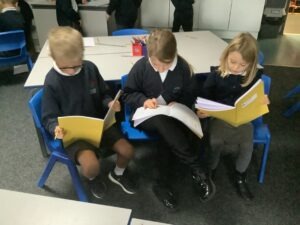
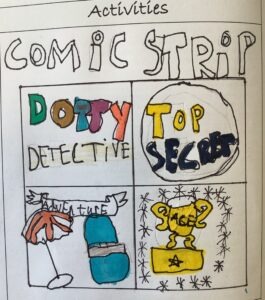
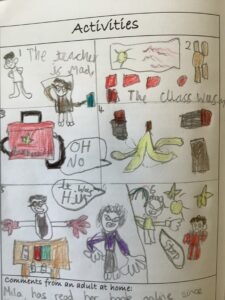
Well done to everyone who has been reading regularly at home by accessing the e-books.
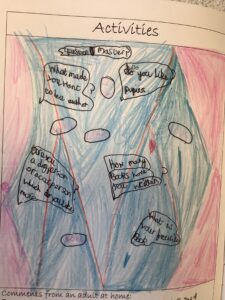
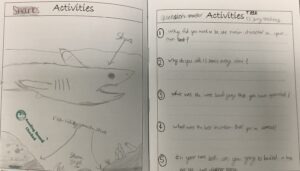
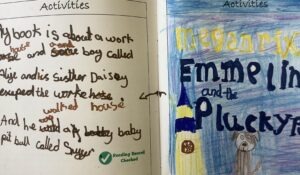
The work completed in the Reading Records looks great! Here are some good examples below.
Keep reading regularly at home and please contact us if you have any questions.
Thanks,
Team 3,4
Geography: Where in the World am I?
This week, we’ve been learning about maps as part of our Geography topic – ‘Where in the world am I? We have been using an atlas to find the page that will support our learning the best. We have looked at maps showing the main cities in The United Kingdom and maps that show the highest mountains and longest rivers in The UK. We found out that The River Severn is the longest river in The UK and Ben Nevis is the highest mountain in The UK and Scotland.
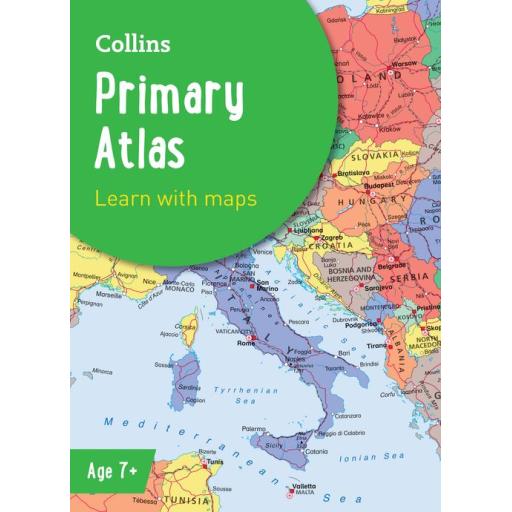
Help at home by quizzing your child on their United Kingdom knowledge. How many rivers, cities and mountains can they name? Have a look at an atlas or google earth to locate some of them.