06 November 2026

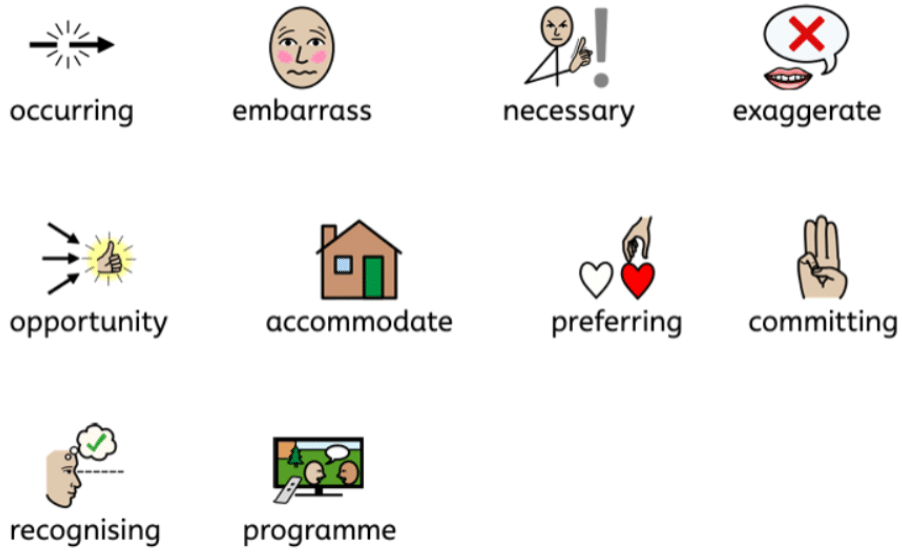
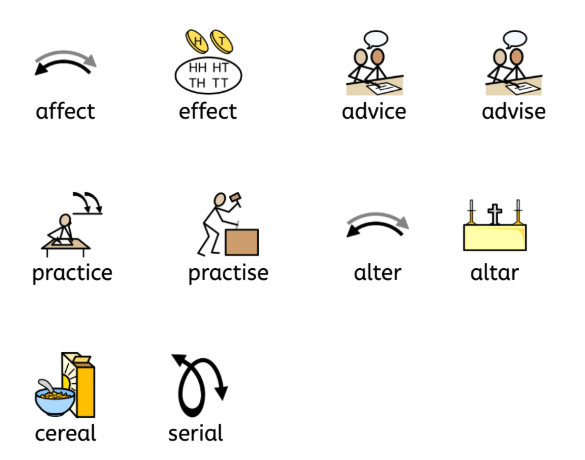
Next week, we’ll be teaching about homophones. The word ‘homophone’ comes from Homo = same (Greek origin) and Phone = sounds (Greek origin). A homophone is a word that sounds the same as another word but has a different meaning and usually a different spelling.

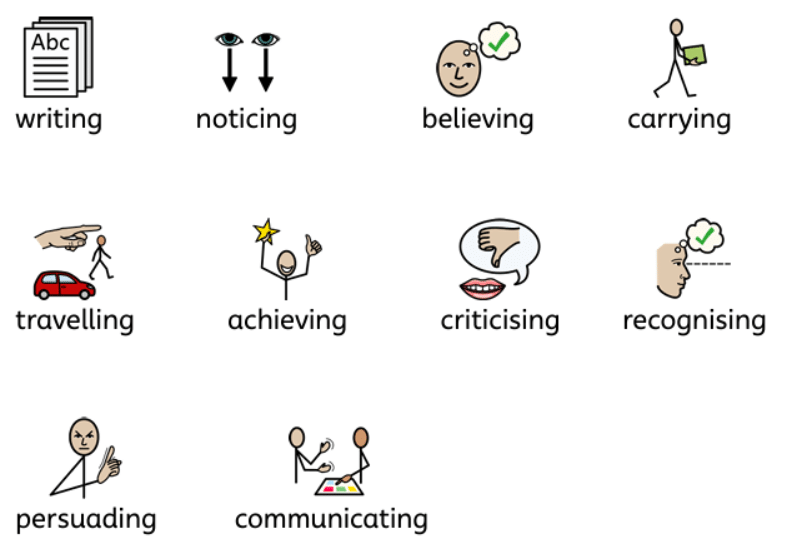
Here are the words we would like you to learn at home ready for a test next Friday.
Me and my community week

This week has been one of our themed weeks in school and we’ve been learning all about our local community and what makes up a community. The children have been exploring what it means to belong to a community and why it is important to show respect towards others. We discussed the different communities we are part of, from our families and school to our local area and wider society. Through discussions children considered how communities can be different, what makes them special.

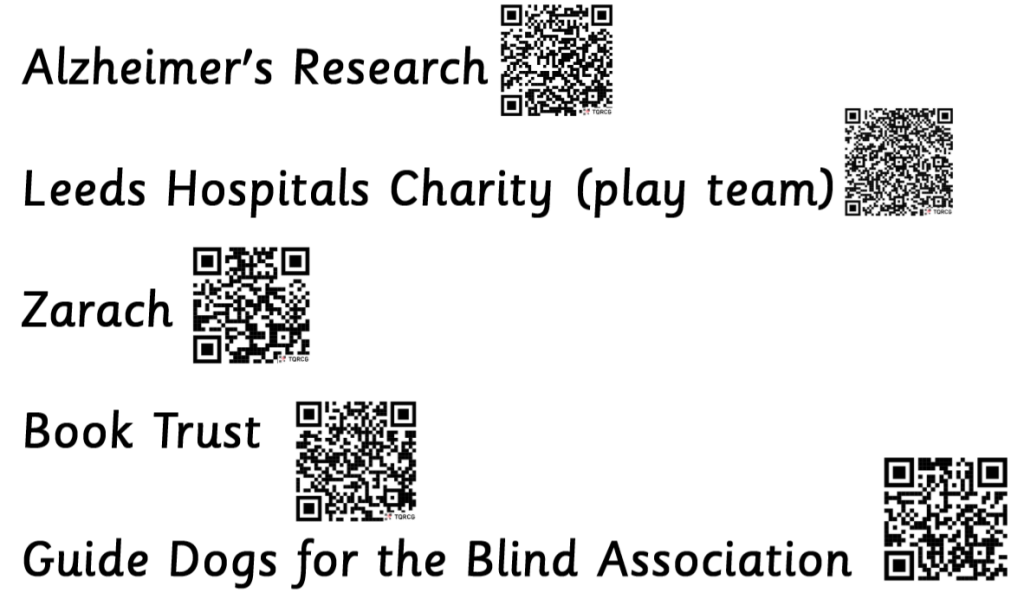
As part of this week, we looked at local charities, their aims and their benefits to the community, with a view of choosing which one our class would like to vote for as our school charity. We did a democratic vote in class and The Alzheimer’s Society was chosen. Ruby then took our suggestion to the Junior Leadership meeting and we are tentatively waiting to see if our charity was selected.

Help at home: If you would like to read more about the charities we’ve been learning about, scan the QR codes below.


Fantastic Food

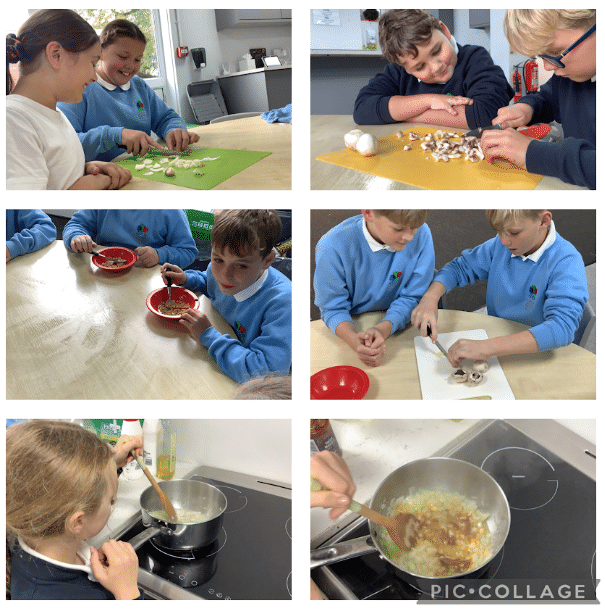
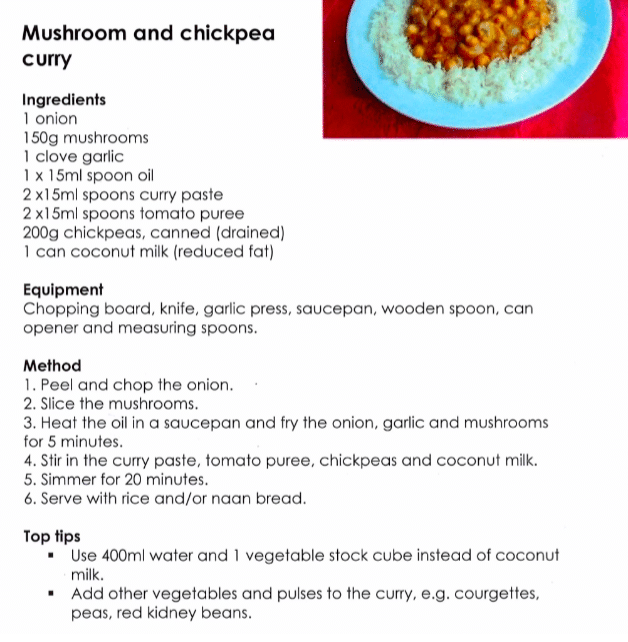
Year 5 and 6 have spent the week being chefs as it was that time of the term where we put our culinary skills to the test. Mushroom and chickpea curry was on the menu this time. The children used a range of ingredients from chickpeas, mushrooms, curry paste and coconut milk. The children began by chopping the onions and mushrooms using the bridge and claw method of cutting. This kept the children safe whilst using the sharp knives. They fried these off along with the garlic before adding the coconut milk, curry paste and chickpeas. This was then cooked for 20 minutes.

The children enjoyed the curry along with some traditional naan bread. The children talked about what they liked about it and how they might improve or add to the recipe if they made it again at home.

Help at home: Have a go at making the recipe at home. Maybe add some meat or chilli to spice it up a bit!


Living and learning – I take part in democratic decisions.

Today, we had great pleasure in listening to some children read aloud their JLT speeches. Our living and learning statement this week is all about democracy and letting children have a voice within our school. It’s that time of year again where we create our new Junior Leadership Team and the children put themselves forward for nomination. They prepared some amazing speeches that talked about their personal qualities and what  ideas they have to make our school an even more happy and healthy place to learn.

They spoke clearly and with prosody in front of the class and they’ve definitely made our decision of who to vote for, very difficult.

Good luck to all our candidates.


09 October 2026

For the next week, our spellings are linked to the rules and strategies we’ll be learning in class:

When adding -ing to a verb, the spelling of the word may change. You may need to double the

final consonant, drop the final e, or make another spelling change.

The children will be sent home a list of ten words that they will need to learn. Please help your child with this as it will have a positive impact in class. If you need any ideas on how to support your child, please see our Spelling Strategies Guide on our school website.

Next Friday, you’ll be tested on the ten words below:

Living and learning

Our living and learning statement has been about respecting others. We linked this to our knowledge of the protected characteristics.

There are nine protected characteristics under the Equality Act:

    1. Age
    2. Disability
    3. Gender reassignment
    4. Marriage and civil partnership
    5. Pregnancy and maternity
    6. Race
    7. Religion or belief
    8. Sex
    9. Sexual orientation

We use the DR GRAMPSS acronym to remember these characteristics. Our class discussions focused  on respectful relationships, helping us to  understand the importance of respect and tolerance.


01 October 2026

For the next week, our spellings are linked to the rules and strategies we’ll be learning in class:

When adding -ing to a verb, the spelling of the word may change. You may need to double the

final consonant, drop the final e, or make another spelling change.

The children will be sent home a list of ten words that they will need to learn. Please help your child with this as it will have a positive impact in class. If you need any ideas on how to support your child, please see our Spelling Strategies Guide on our school website.

Next Friday, you’ll be tested on the ten words below:


Science

We are being biologists this half term and we’re studying organisms – plants and animals. This week’s lesson, the children were using classification keys to identify different plants and trees. First, they used an existing key to work out some different trees. They had to use their knowledge of whether trees were deciduous or evergreen, whether they flowered or produced fruit or even if they produce cones.

The children then had a go at creating their own classification keys. They had to think of different scientific questions in order to organise and classify some different trees.


Maths – year 6

This week, the children have been looking at different scales and graphs. They have become experts at saying what they can spot when they’re given an unknown graph of information. Today, they were able to work out missing intervals and estimate the size of the columns on this graph.

They were then given to time to show me what else they knew from looking at the graph. The could calculate the sum of minutes for different children and they could also work out the difference of minutes. They knew which calculations they needed to perform. It was great to see the children using effective mental methods such as scaling, rather than relying on written methods.