
This week in Maths, the Y1 children have been composing numbers from 11-19. We have been using Numicon, Rek n reks and 10 frames to form each numbers. We know these numbers are made up of ’10 and a bit’.


We also drew part-whole models and wrote some addition equations.


Help at home by discussing numbers. Ask children what each digit represents. For example, in the number 13, the 1 represents the one ten and the 3 represents 3 ones.
Science – plants
This half term, we are learning about plants. We’re learning about parts of a plant (roots, stem, leaf, flower, petal, branch, trunk) and we used our working scientifically skills to observe them closely.

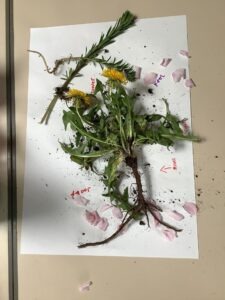

Help at home by identifying plants or trees in your garden or local area, naming the parts.
Living and Learning – healthy eating
Over the past fortnight, we’ve been learning about the importance of a healthy diet and of ‘five a day’. We’ve discussed what constitutes a portion of fruit and vegetables and the main food groups that make up a healthy diet, to give our bodies what they need.
We also had a look at the Sphere Guide to Healthy Packed Lunches, which has lots of tips and ideas for snacks and meals.
Help at home by preparing food together and talking about what different types of food provide for our bodies.

Happy Easter!
What a wonderful last day of term we’ve had in 1A! We had an Easter Egg rolling competition this morning.


We decorated some eggs, read some Easter books and have had a brilliant time playing in the sunshine.


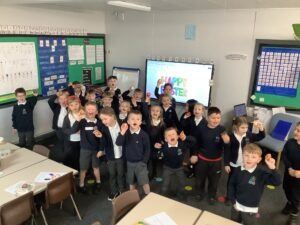
Have a lovely Easter everybody! Stay safe 🙂
Miss Young
Science – planting
We have a brilliant time planting seeds and bulbs in 1A. In January we planted some mystery bulbs. We kept them inside the classroom for a few months so that they were warm. They have started to grow and have some strong stems. We are excited to find out what type of flower they grow into.

We also spent time planting sunflower seeds. We put soil into our pots, made a hole, put the seeds in the hole and covered them back up. Our star of the day is in charge of making sure they are watered each day in class. They will stay inside for a few weeks and then we will put them in our garden alongside the bulbs!


Help at home by encouraging children to help with planting seeds. Can they discuss the order in which a seed is planted and discuss a plants basic needs?
2C Update
Red Nose Day-Thankyou for all of your kind donations. The children have enjoyed wearing red to read in the library.


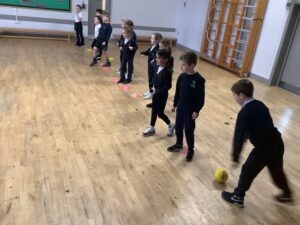
We have been working on our defense, dodging, kicking and throwing skills through our class game of ‘Mouse Trap.’ All classes in KS1 have been enjoying this PE game!


In Science lessons we are enjoying the discipline of Biology. This week we have been for a Spring walk. We spotted lots of blossom, daffodils and buds on trees. We have been comparing the different seasons. Our Poem of the Week is by William Wordsworth and it expresses the beauty of daffodils.
Help at home: Ask your child to read or recite the poem to you.


Red nose day
We’ve had a fantastic day today for Red Nose Day! Thank you to all parents and carers for sending children in with non-uniform and a donation to the Comic Relief charity.


Help at home by discussing what Comic Relief is all about an how the money raised supports those living in poverty.
When is Red Nose Day in 2026 and how did it start? – BBC Bitesize
A lovely Spring week in 1A
We’ve loved the weather this week and looking at the blue sky at playtime.
This week we have been adding and subtracting 2 in our Maths learning. We know if we are adding 2 to a number, we jump forward over the next number (our next door neighbour), to find the answer. If we are subtracting, we do the same but we jump backwards.


In Science we have been learning about the seasons. We know there are 4 seasons and it is currently Spring. The weather is getting warmer, the days are getting longer and we can go outside (sometimes) without a coat.

We are learning about Computing in Topic. We’ve been designing games so far this half term. Today we finally got to use the Beebots. We typed in an algorithm and watched the Beebot go where we wanted it to. If it didn’t we were able to debug the algorithm and fix it.


Thank you for your continued support at home with reading, spelling and number facts.
Living and Learning – health & prevention
In KS1, we are learning about personal hygiene. Last week we discussed the importance of hand washing and using soap. This week we have thought about dental hygiene and the importance of looking after our teeth by brushing them twice a day, avoiding too many sugary foods and making sure we visit the dentist. We learnt that children aged 7-10 are advised to have no more than 24g of sugar per day. We were shocked to discover that a can of fizzy pop contains 35g of sugar!
Help at home by asking your child what they know about how to look after their teeth.

Computing-Using Bee Bots in 1/2B
1/2 B have been using Bee-Bots. They are small, friendly robots that look like bright yellow bees. They can move forwards, backwards, turn left and turn right when we press the buttons on its back. We use Bee-Bots to learn about coding. Coding means giving the robot clear instructions so it knows where to go.


Our Living and Learning statement this week is: I know the importance of personal hygiene, including handwashing. KS1 have enjoyed seeing the effect that soap has on our fingers when we put our soaped fingers in a dish of water and pepper. It’s a great visual to demonstrate the powerful effect that soap has on germs. This, hopefully, encourages the children to continue their great handwashing habits.
The pepper just runs away from my finger!-Myla
The soap will scare the germs away!-Oscar


Class reward. Each class has a target and when we have met the target, multiple times, we get a class treat! 1/2B have responded positively to their ‘3,2,1, Stop’ instruction. Their chosen class treat was to go to the adventure playground. Well done 1/2B!


